NFT marketplace


client
NFT
marketplace
NFT marketplace
industry
Web3
platform
Web application
4 months
Duration
4 employees
Team
Request
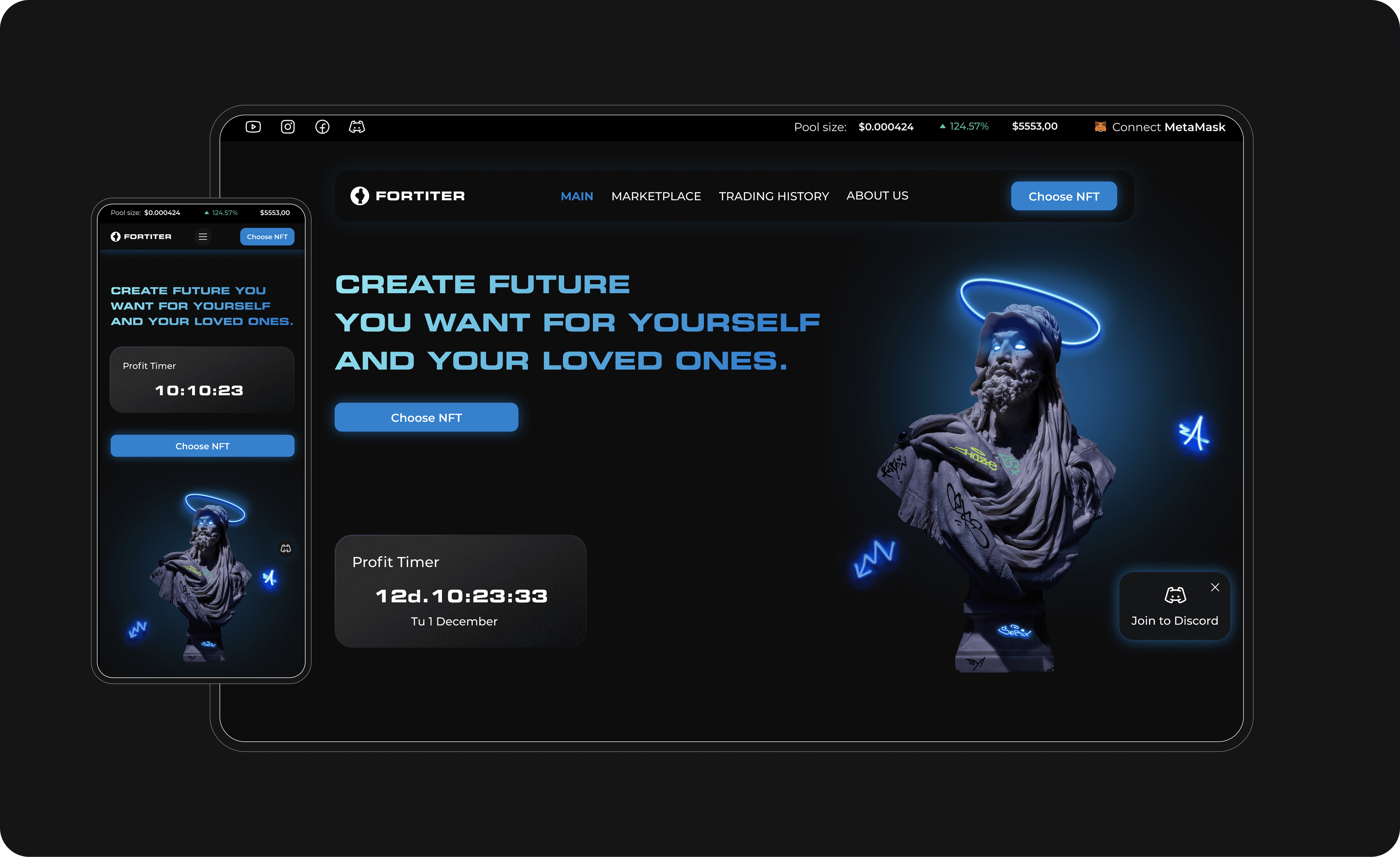
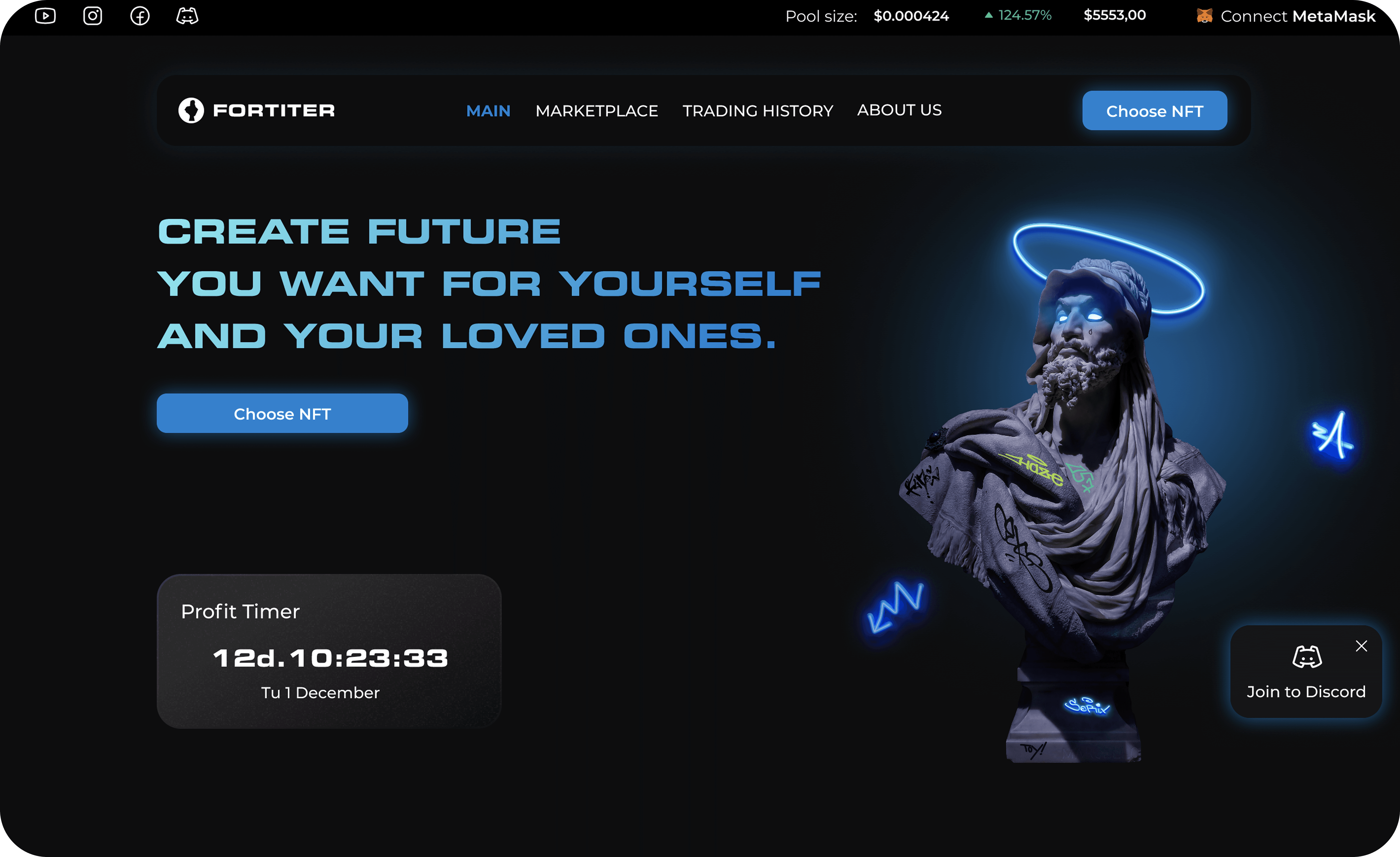
Fortiter needed a marketplace that supports NFT trading flows with wallet connectivity, rarity filtering, ownership data viewing, and weekly revenue distribution tracking. Transaction status must be clear so that users understand what is happening when they sign, confirm, or reject an action on the blockchain. Our task was to create user paths that were stable and consistent with their membership model.
Challenge
Our team had to synchronize the marketplace UI with real-time blockchain data. It updates frequently and unpredictably, so careful state management was a must. We also needed to manage wallet sessions, keep users on the correct network, and handle failed or delayed transactions accurately. Another challenge was matching NFT metadata, rarity levels, and trading history. The interface had to reflect the chain's actual state.
Our solution
We have created a Web3 service layer that manages contract calls, tracks blockchain events, and updates the interface when transaction status changes. The UI runs on structured data models. This way, each NFT card displays the correct rarity, owner, and availability without manual updates. Our team has also added network checks, explicit error messages, and predictable transaction flows. These help users perform actions even during gas fee spikes.
Core Features
Wallet Connection
Users connect their wallet and immediately see whether they are on the correct network, which permissions they are granting, and which actions require signing. The system tracks session status on the client side and updates the interface whenever the wallet switches between accounts or networks. No conflicts or failed transactions due to mismatched settings.
NFT Marketplace Browser
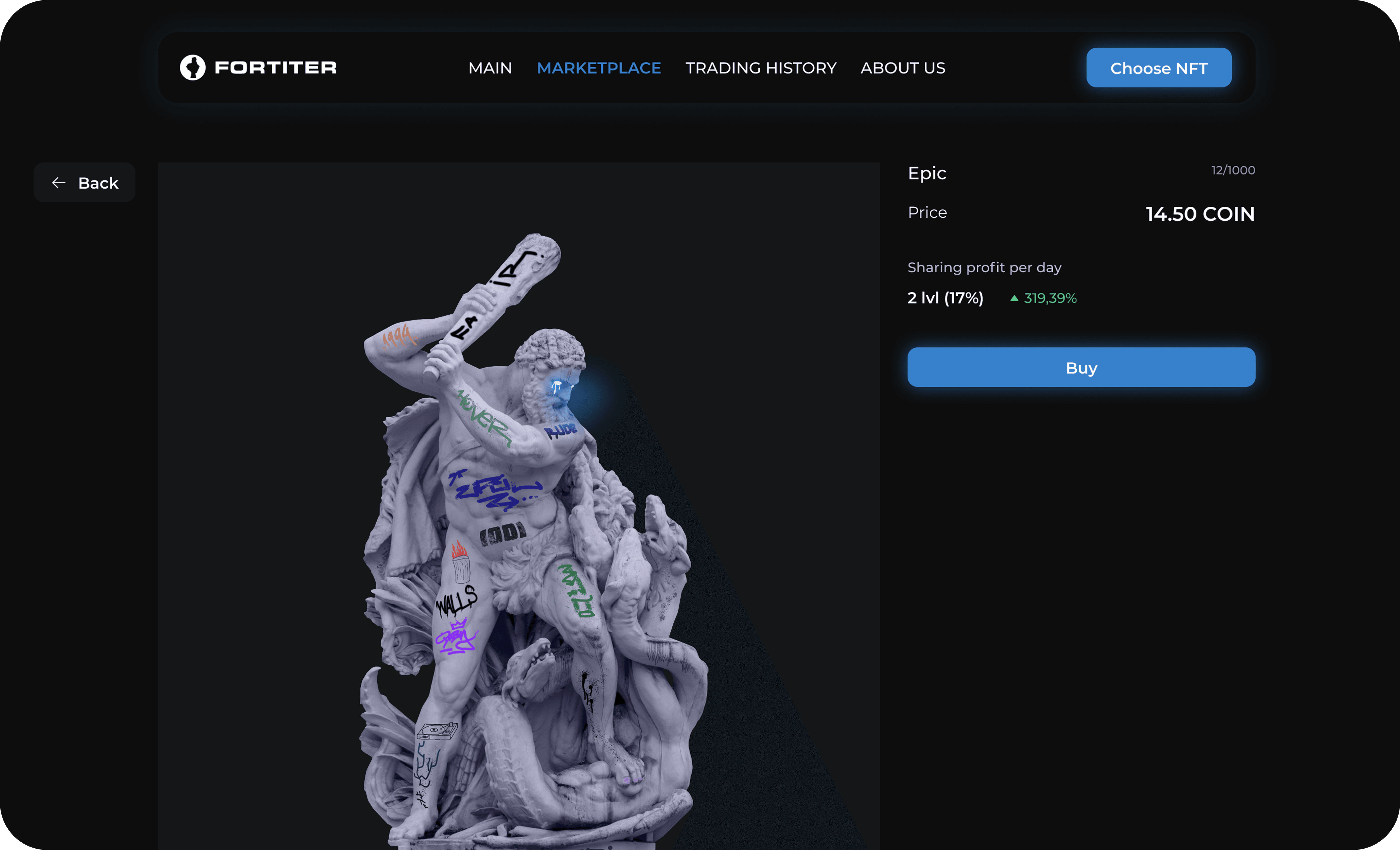
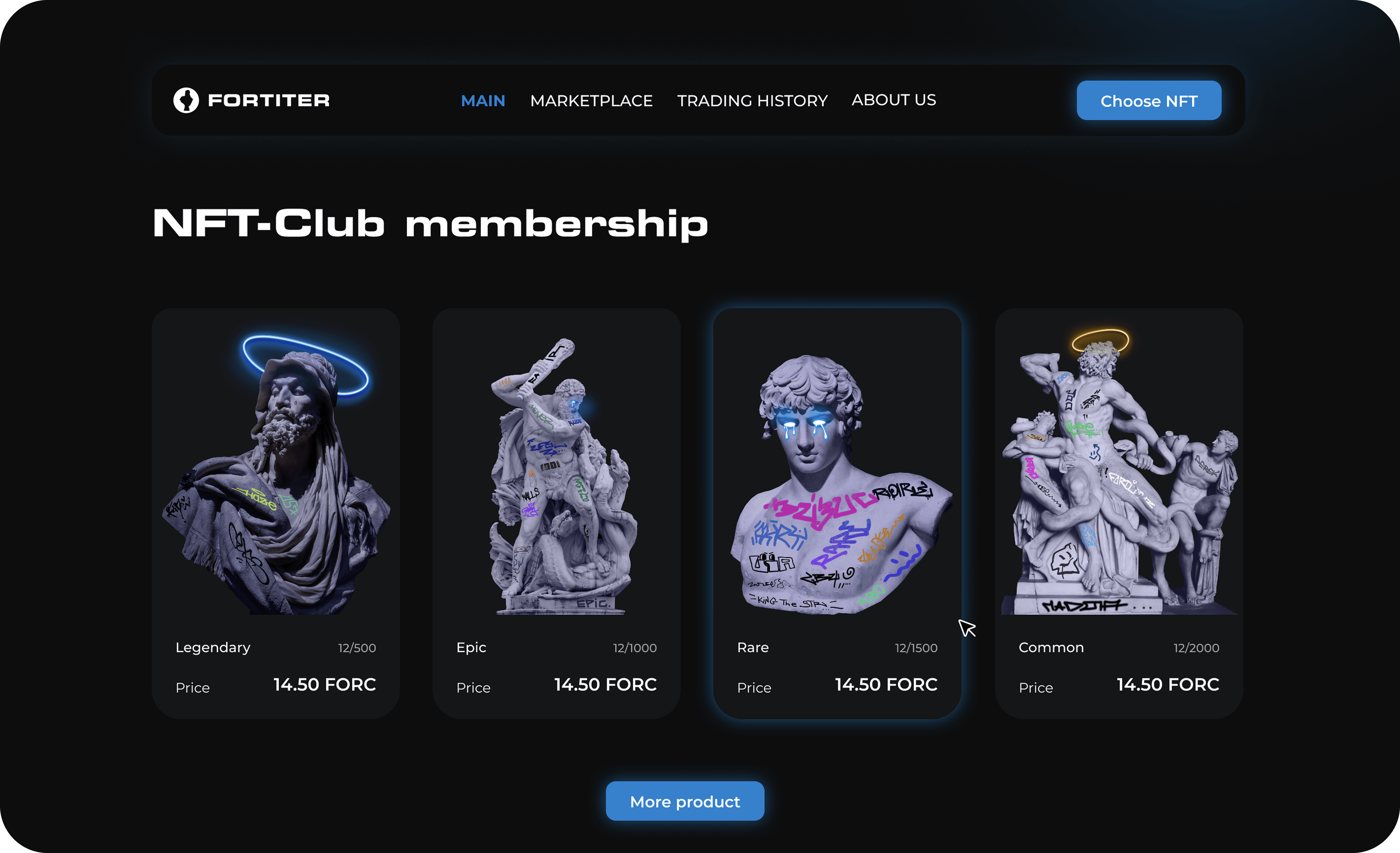
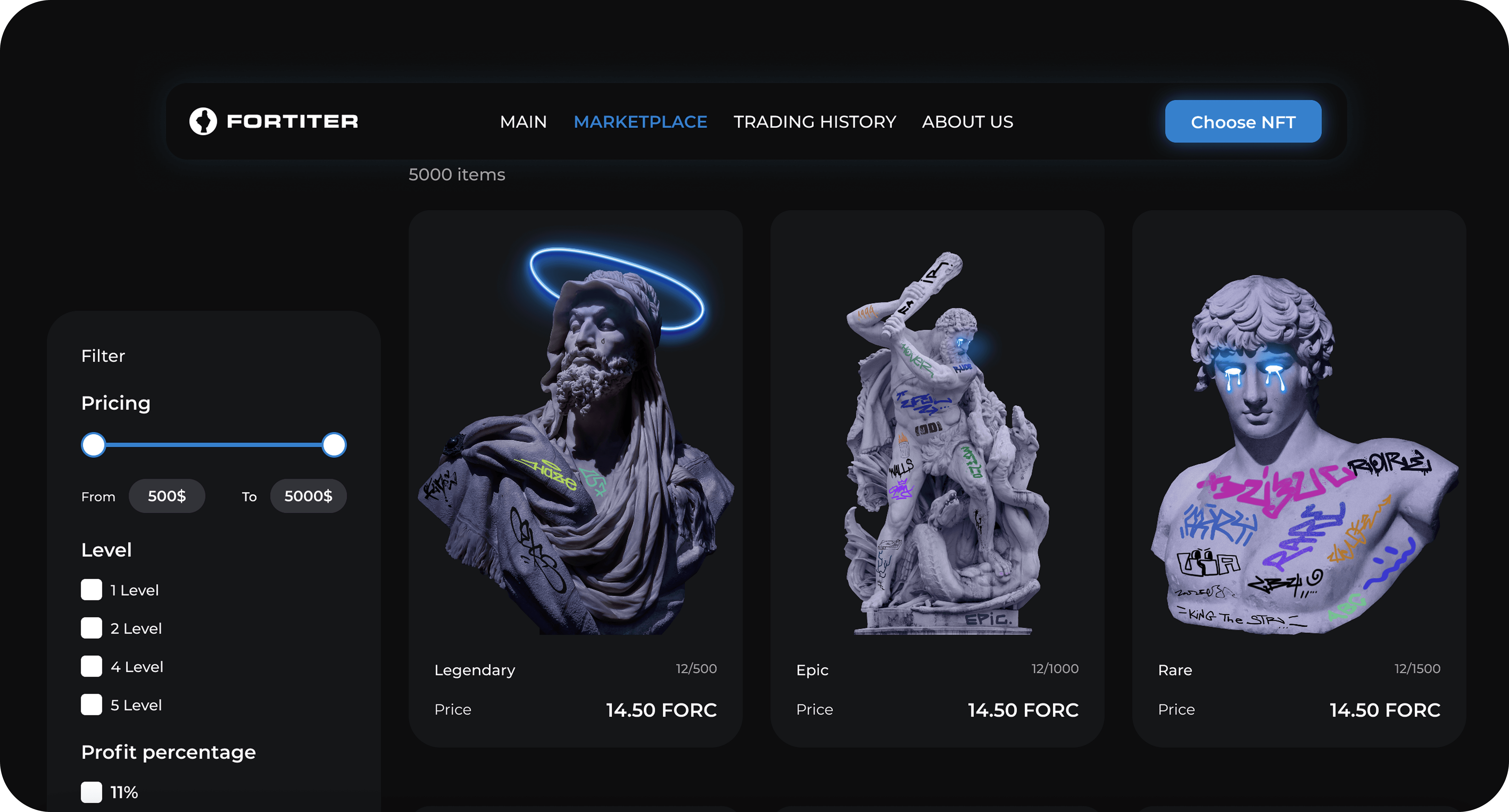
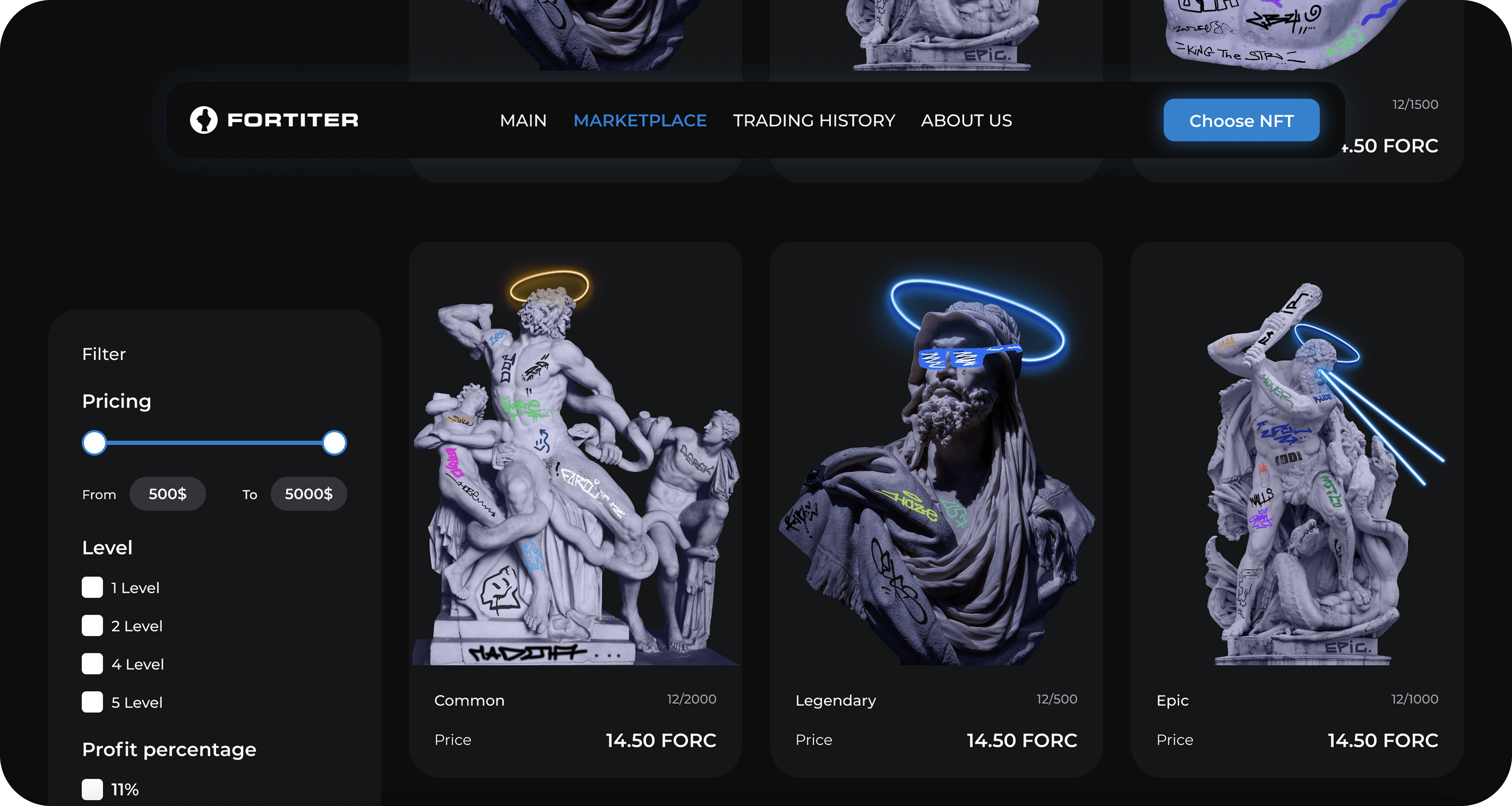
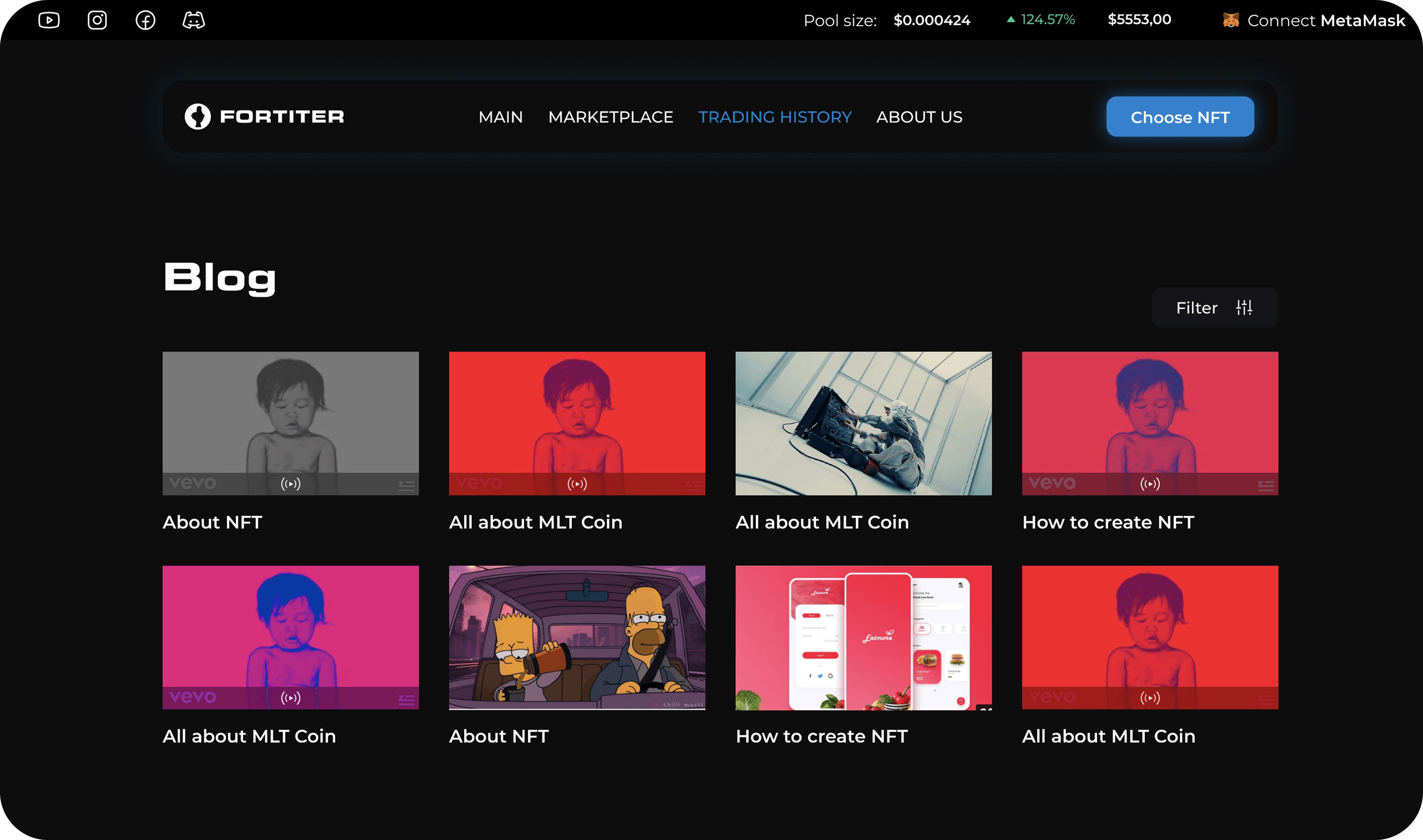
The marketplace displays NFTs with accurate rarity levels, ownership data, and availability information obtained from events in the chain. Each card updates when the token is listed for sale, purchased, or transferred. We took care that users never work with outdated information. Filters and sorting help them browse collections and quickly find items that match their criteria.
Trading History Dashboard
The dashboard shows the latest market activity. Data comes from processed blockchain events to track real market behavior. Users can see completed trades, price ranges, and pool distribution metrics. This overview helps them understand how the platform's weekly payout model works and how trading volume affects their rewards.
Revenue & Pool Overview
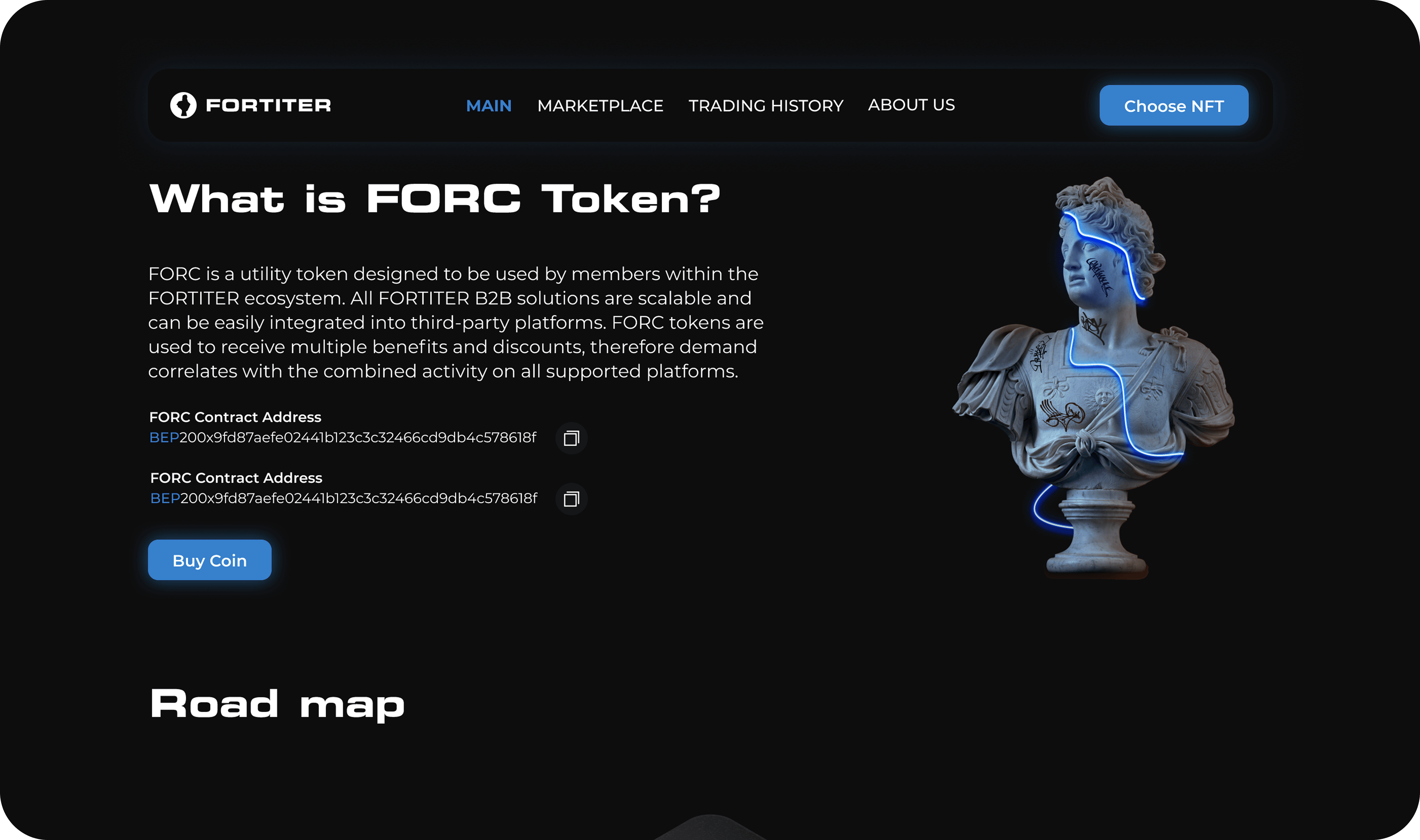
Users can monitor how weekly revenues get split between NFT owners, traders, and the platform, plus the exact percentages that apply. The interface converts raw blockchain data into understandable summaries. As a result, people know how payments work without reading the smart contract code. This feature promotes informed decision-making and builds trust in market mechanisms.
Technologies and tools we used


Project team