
Runway5 – Aircraft Marketplace Platform


client
Runway5
Runway5
industry
Ecommerce
platform
Web & Mobile
5 months
Duration
6 employees
Team
Request
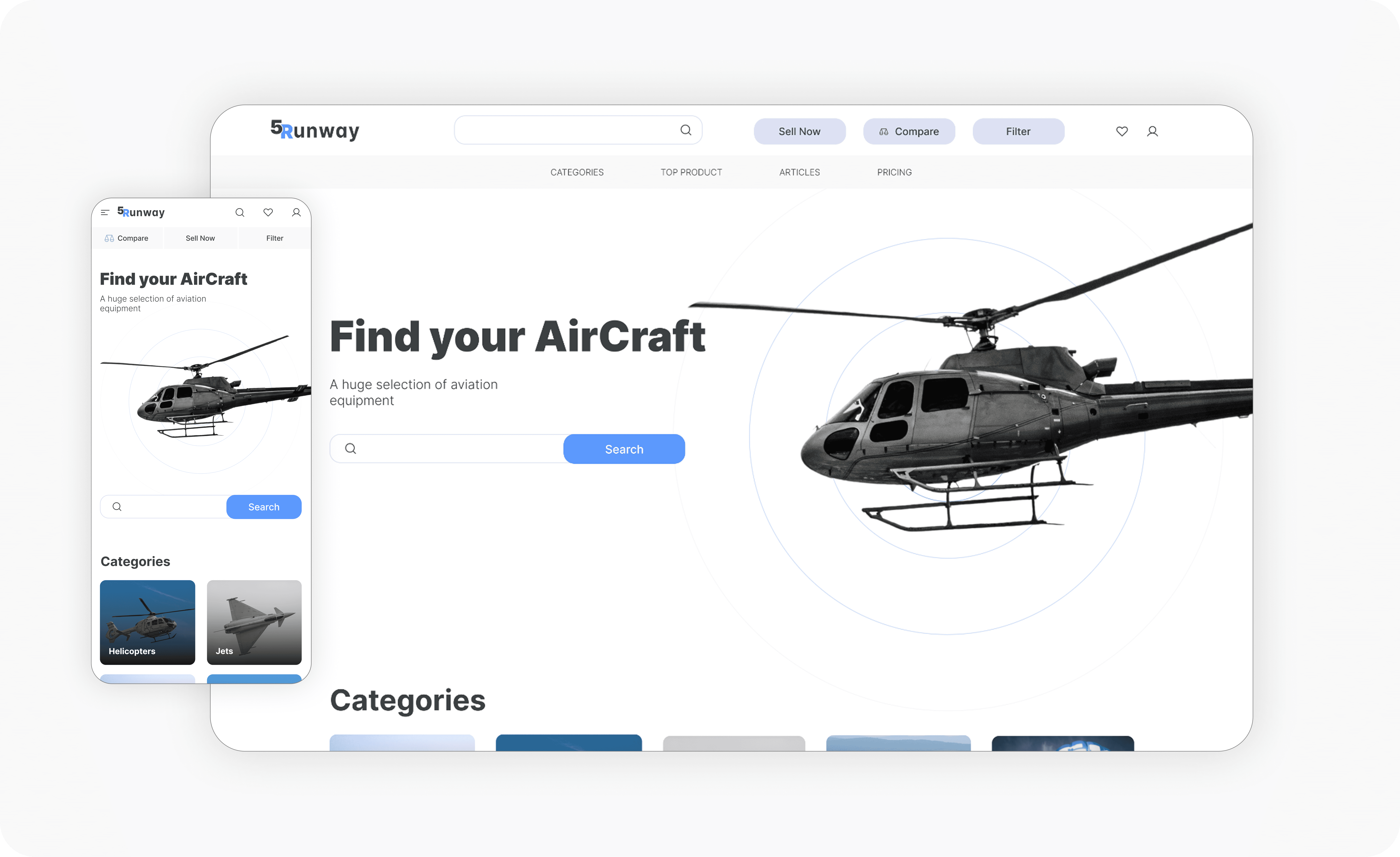
The client needed an aircraft marketplace that could handle high-value listings, long decision cycles, and strict information requirements specific to aviation sales. The platform should cover two flows: advanced aircraft search and comparison for buyers, and a controlled, subscription-based listing process for sellers with multi-step data entry. Publishing, managing, and contacting actions had to be clear and traceable.
Challenge
The main challenge was creating an airplane marketplace that did not adhere to traditional e-commerce logic. Transactions are high-value, unusual, and require lengthy decision cycles involving multiple rounds of review, deep comparison, and permanent user context. This required flexible data models for complex aircraft specifications, documents, and media, multi-step draft publishing, and subscription-based access control across listing lifecycles.
Our solutions
Our team replaced cart-based flows with persistent user state, long-session comparisons, and inquiry-driven interactions. We implemented aircraft listings as modular data entities with draft workflows, partial validation, and decoupled media handling. It supports complex specifications, documents, and high-resolution assets without performance loss. We also enforced subscription rules and listing lifecycles at the backend level to guarantee consistent access control.
Core Features
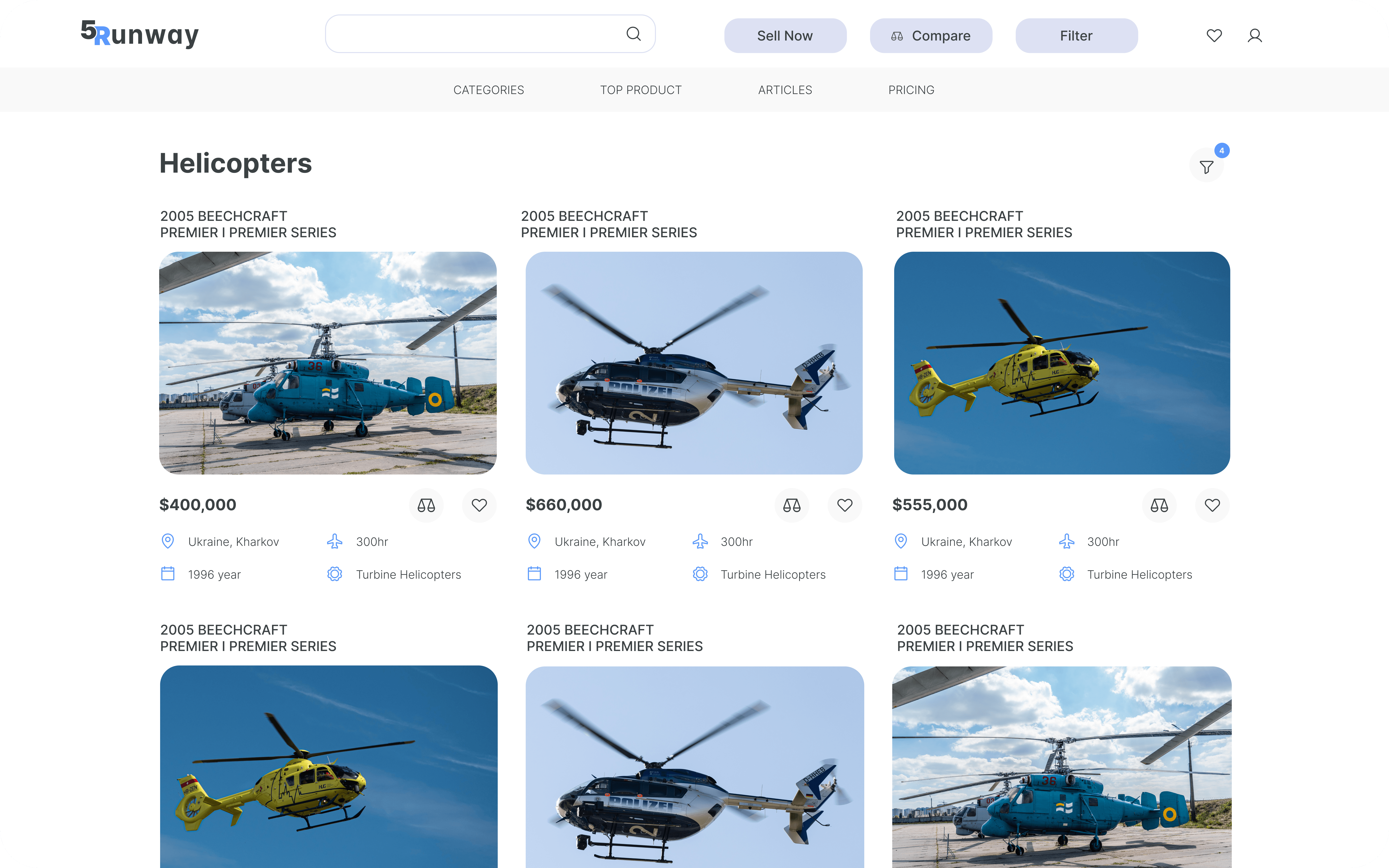
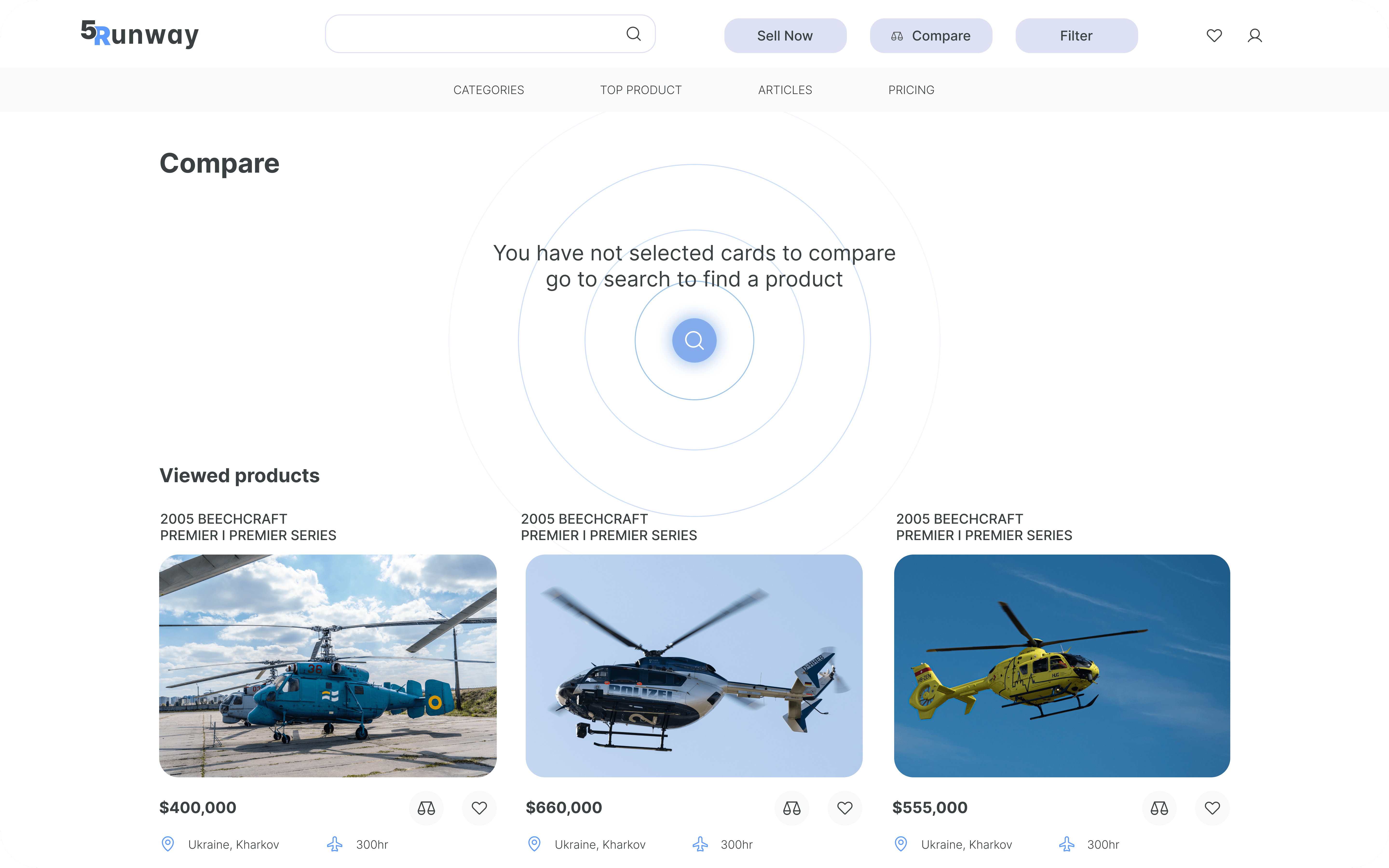
Advanced search and comparison
Our team created a search algorithm based on aircraft-specific parameters and implemented a permanent “shortlist” mechanism. Users can return to it after several days or weeks without restarting the evaluation process. For comparison, we structured the characteristics into identical groups that allow users to compare aircraft even when they have different sets of attributes.
Subscription-based seller accounts
We implemented seller subscriptions as enforceable backend rules. The plan level controls who can publish, how many active listings a seller can have, and what management actions are available. Our team has linked subscription status to the listing lifecycle. The system blocks invalid actions and provides clear reasons with the next steps. This approach prevents “shadow states” where the user interface shows one thing, and the server allows another.
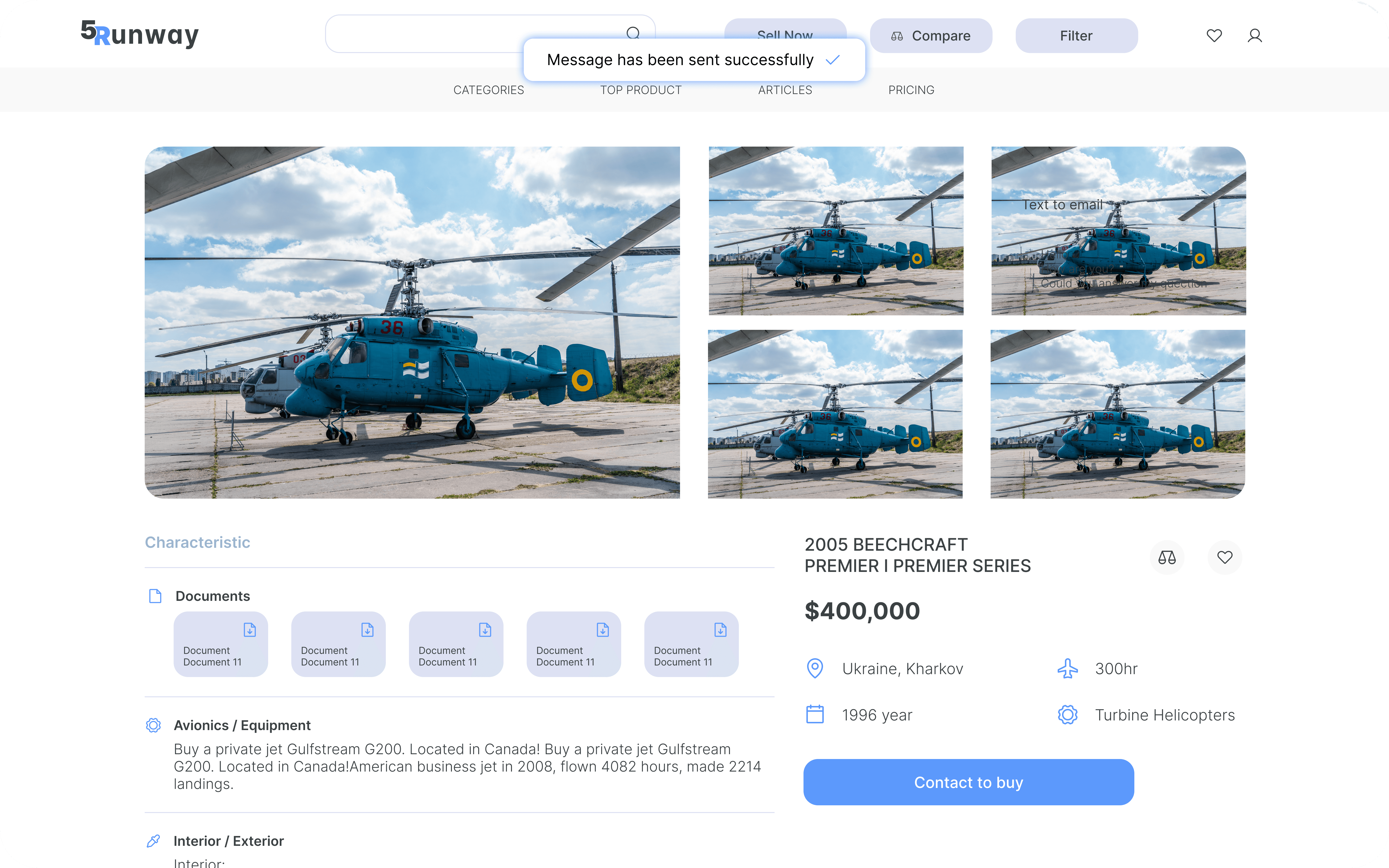
Seller dashboard and multi-step aircraft publishing
The workspace organizes the workflow step by step, providing guidance and instruction. Sellers create drafts, upload media, include specs, attach documents, preview, and finally publish. We implemented draft persistence and partial validation to save incomplete listings and return later. Sellers can easily update status, alter critical elements, and manage publication in the dashboard using explicit system messages.
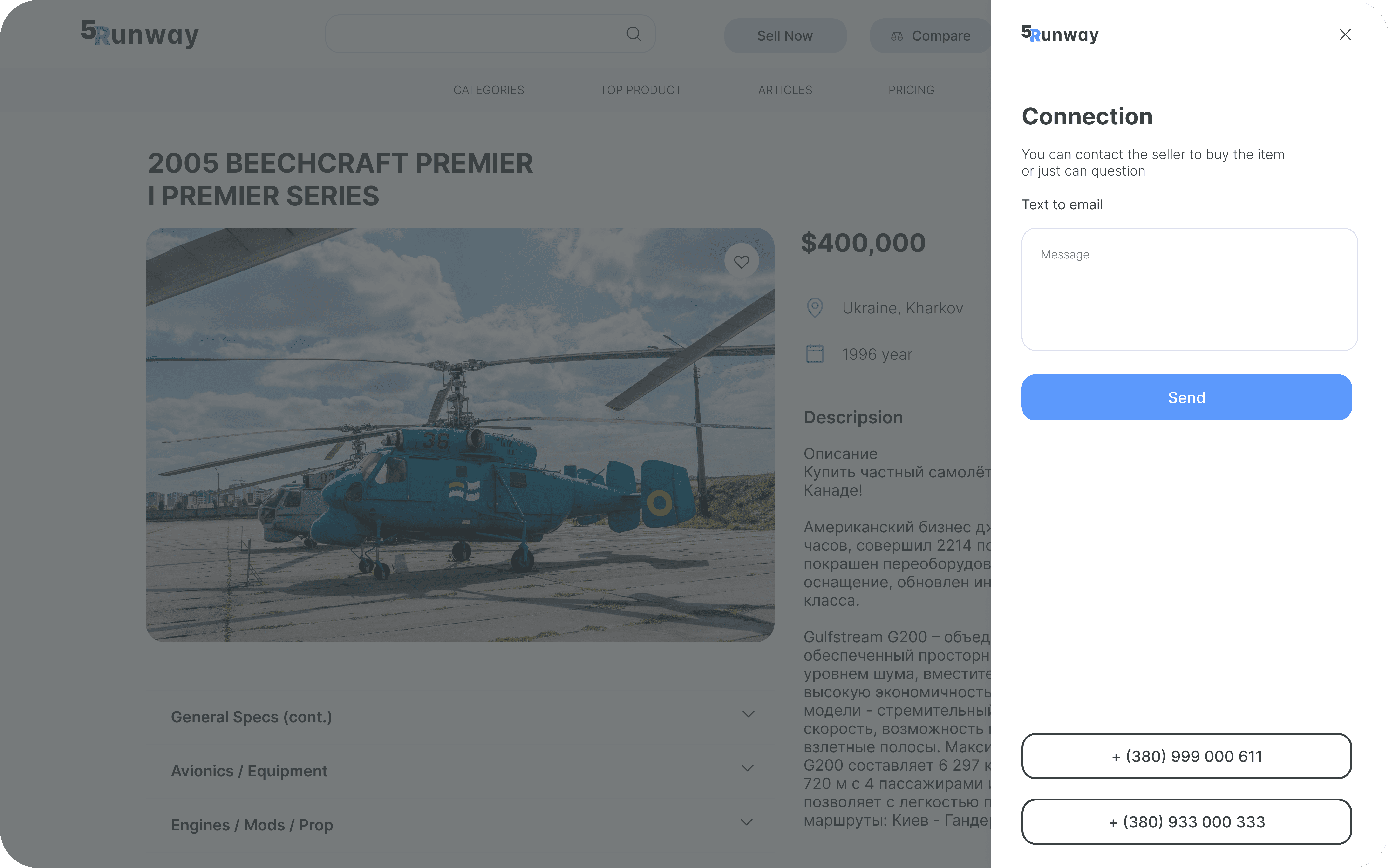
Buyer–seller inquiry flow
Aircraft purchases rarely follow instant checkout, so our team built an inquiry-first flow that routes buyer intent into structured contact requests rather than a cart. We implemented a guided form that captures the context sellers need and creates a traceable inquiry record linked to the listing and seller account. This keeps communication auditable and reduces low-quality leads by pushing buyers to provide enough detail for a meaningful first response.
Results
- < 1.1s average load time. Achieved sub-second page loads for image-heavy aircraft listings by implementing decoupled media management and lazy-loading strategies for high-resolution assets.
- 40% reduction in API latency. Optimized data retrieval for complex aircraft specifications by structuring characteristics into identical groups, reducing payload size during comparison queries.
- 5-month time-to-market. Delivered a fully production-ready, dual-flow marketplace (web & mobile) with complex logic in just 5 months with our team of 6.
Technologies and tools we used


Project team