
Talay — Mobile App for Watch Collection Management and Loan Creation


client
Talay
Talay
industry
Fintech
platform
Mobile application
5 months
Duration
6 employees
Team
Request
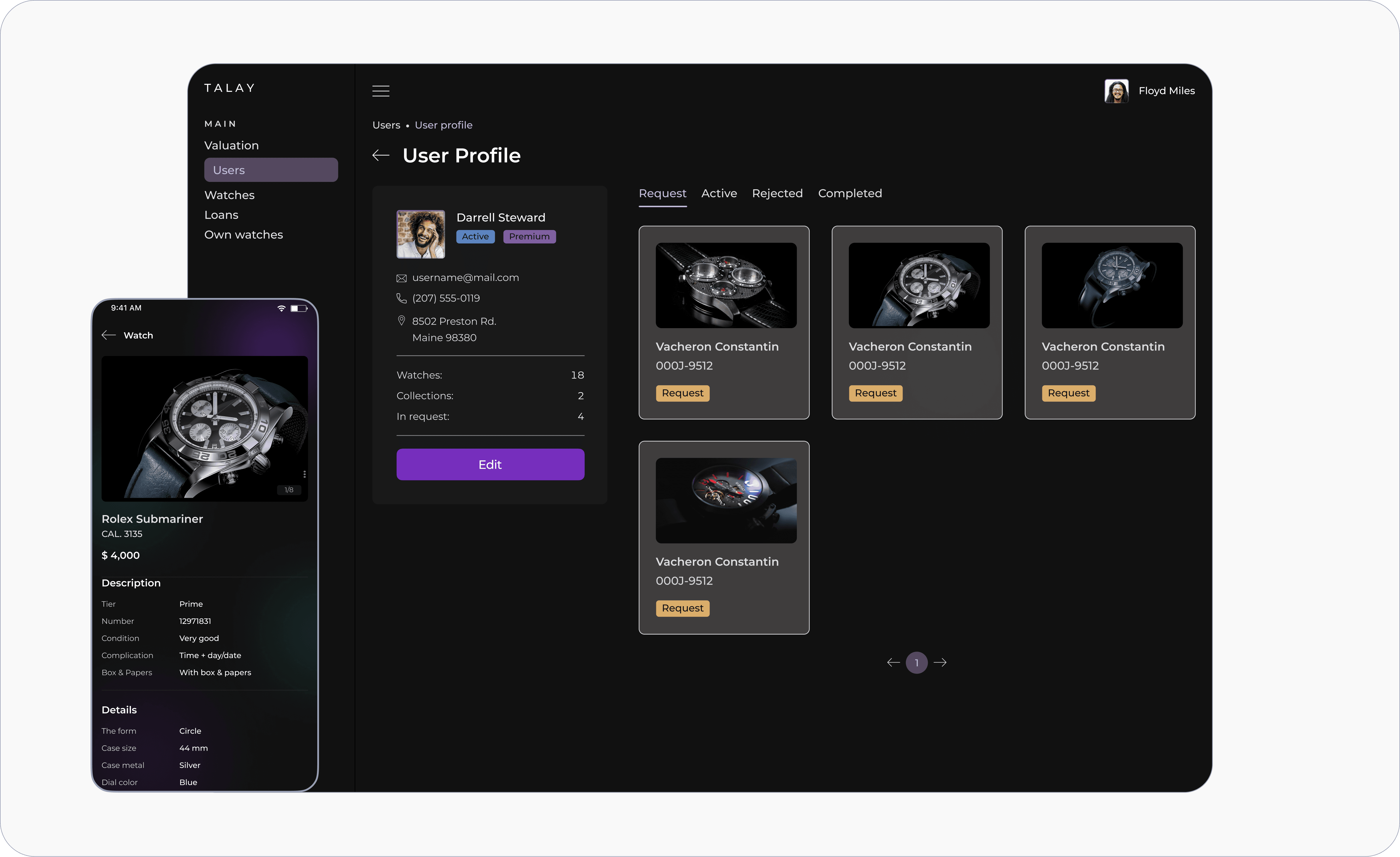
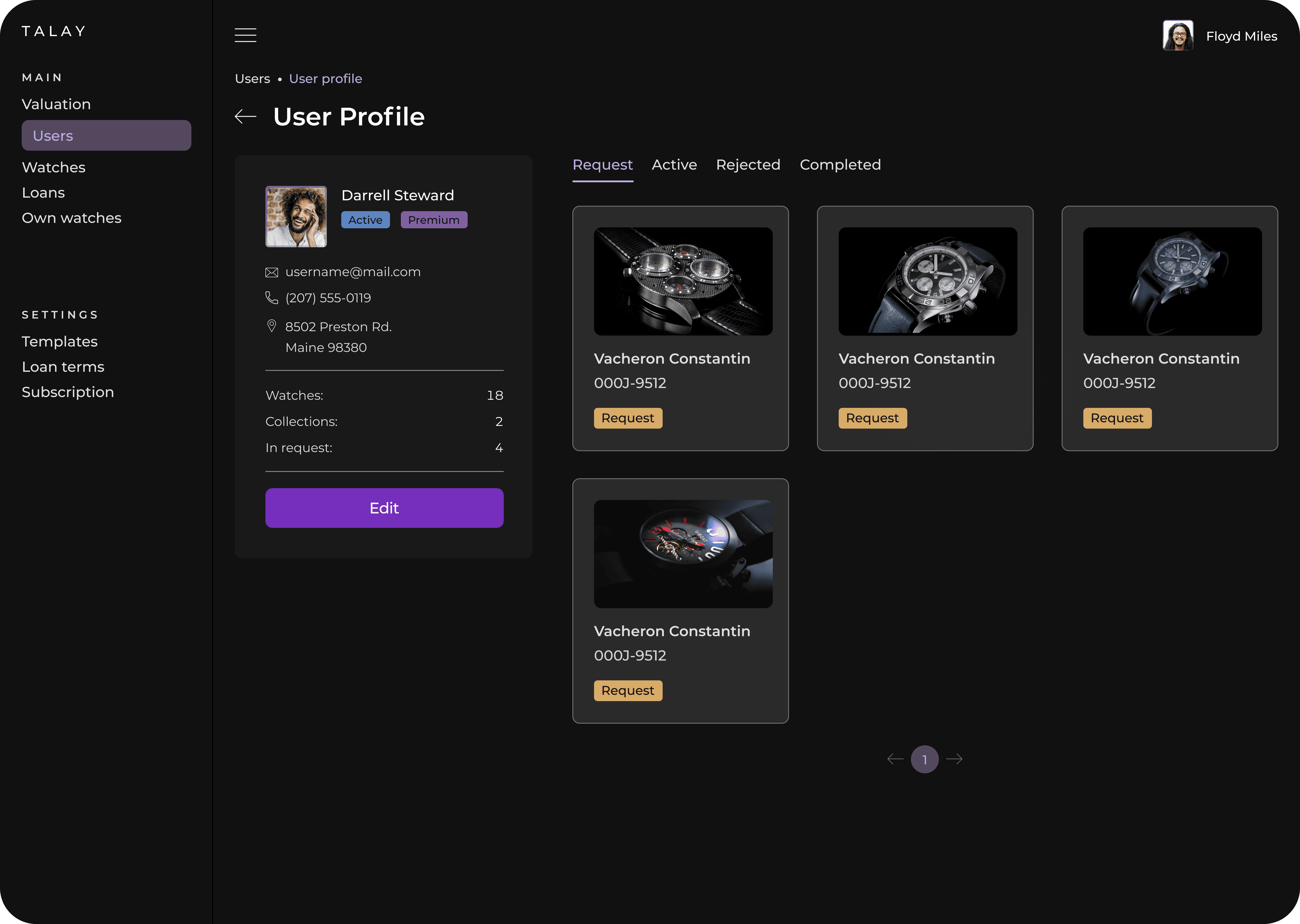
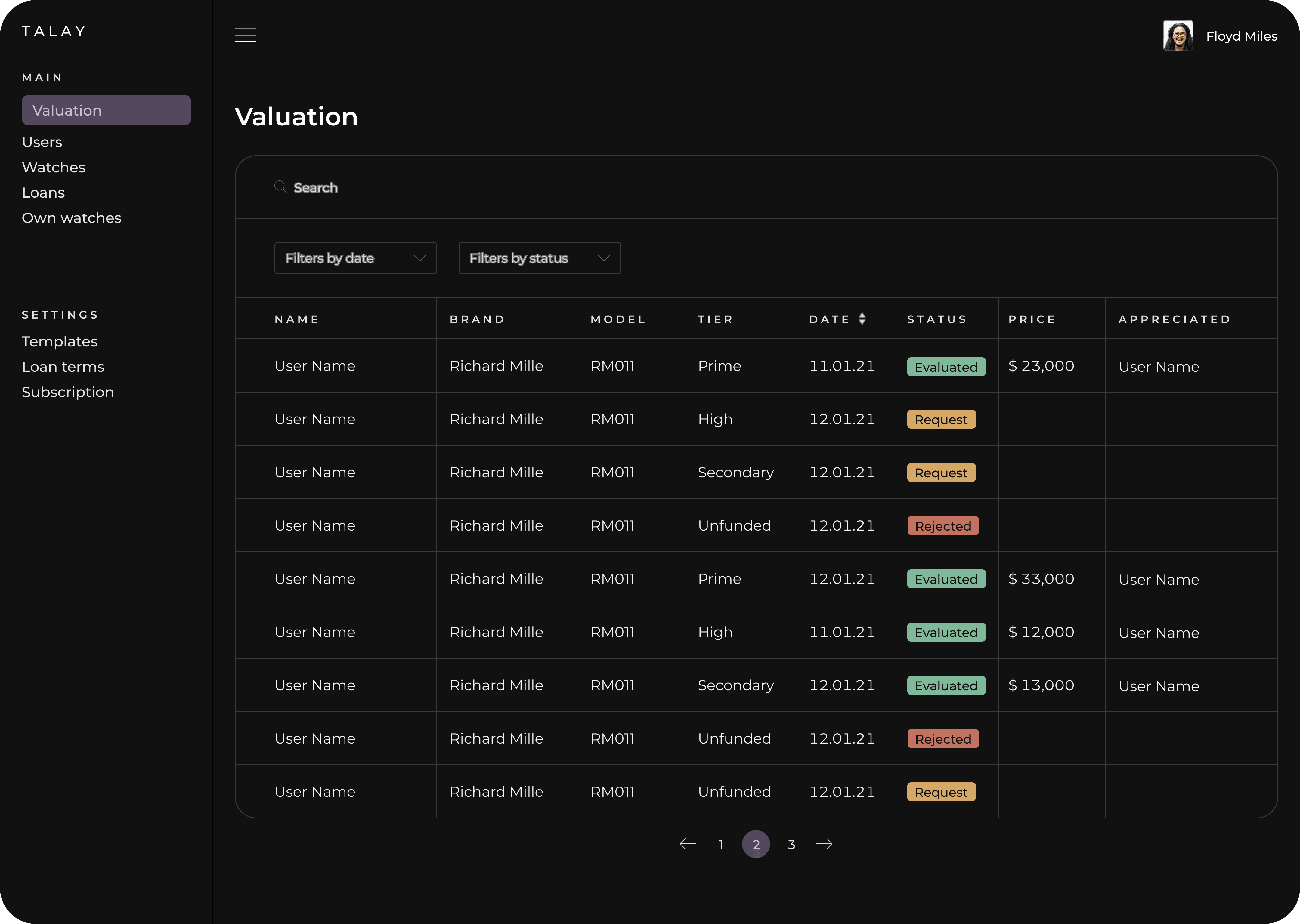
The client needed to replace manual and fragmented workflows for managing watch collections and creating loans based on physical assets. The product had to structure asset data, standardize evaluation inputs, and connect collections with a clear loan creation flow. The scope included authentication, multi-step asset onboarding, valuation logic, and full loan lifecycle management within one mobile app.
Challenge
The main challenge was structuring unstandardized watch data (images, specs, condition) into a consistent model that supports valuation and loan creation. We also had to design a scalable architecture that links assets, collections, and loans. Data must be synchronized across flows. At the same time, the UI had to remain simple despite multi-step onboarding and state-heavy logic.
Our solutions
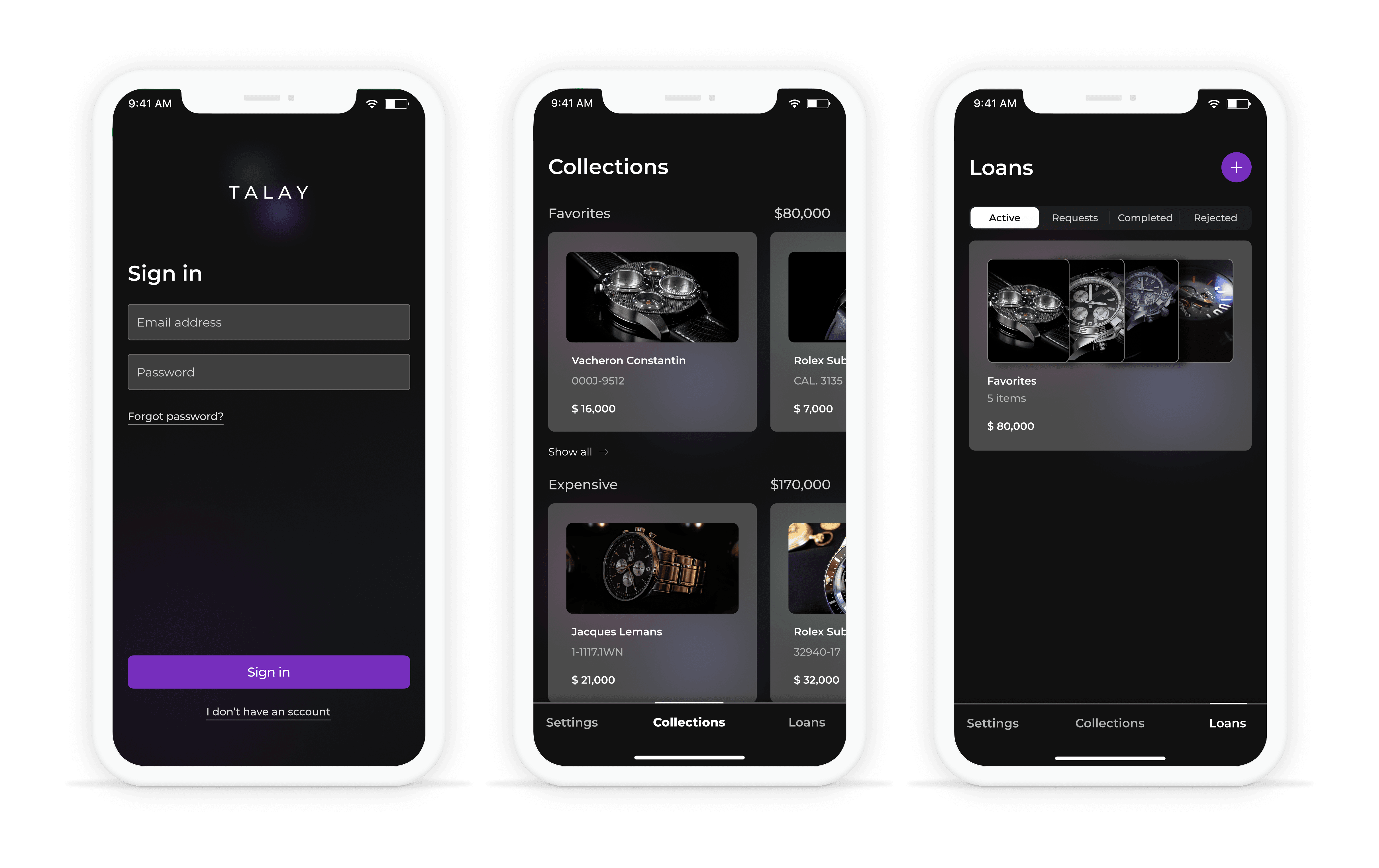
We implemented a step-based onboarding flow with strict validation at each stage, so every watch is captured with complete and usable data for valuation. The system uses a centralized state layer to manage asset data, collection aggregation, and loan parameters. Updates are consistent across all screens and actions. Our team also introduced role-based logic for loan states and configurable input forms to support different loan scenarios without changing the core architecture.
Core Features
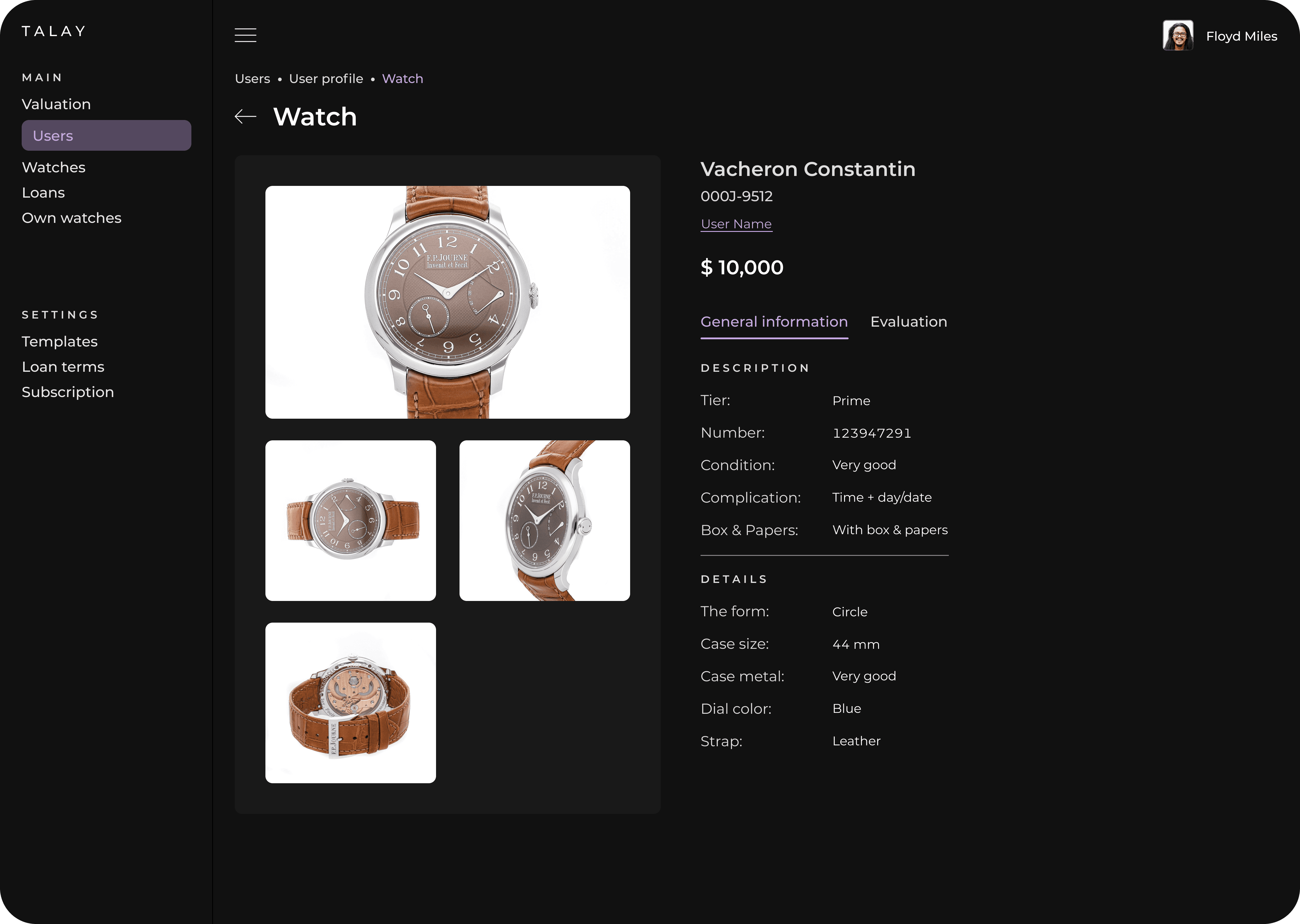
Structured Watch Onboarding
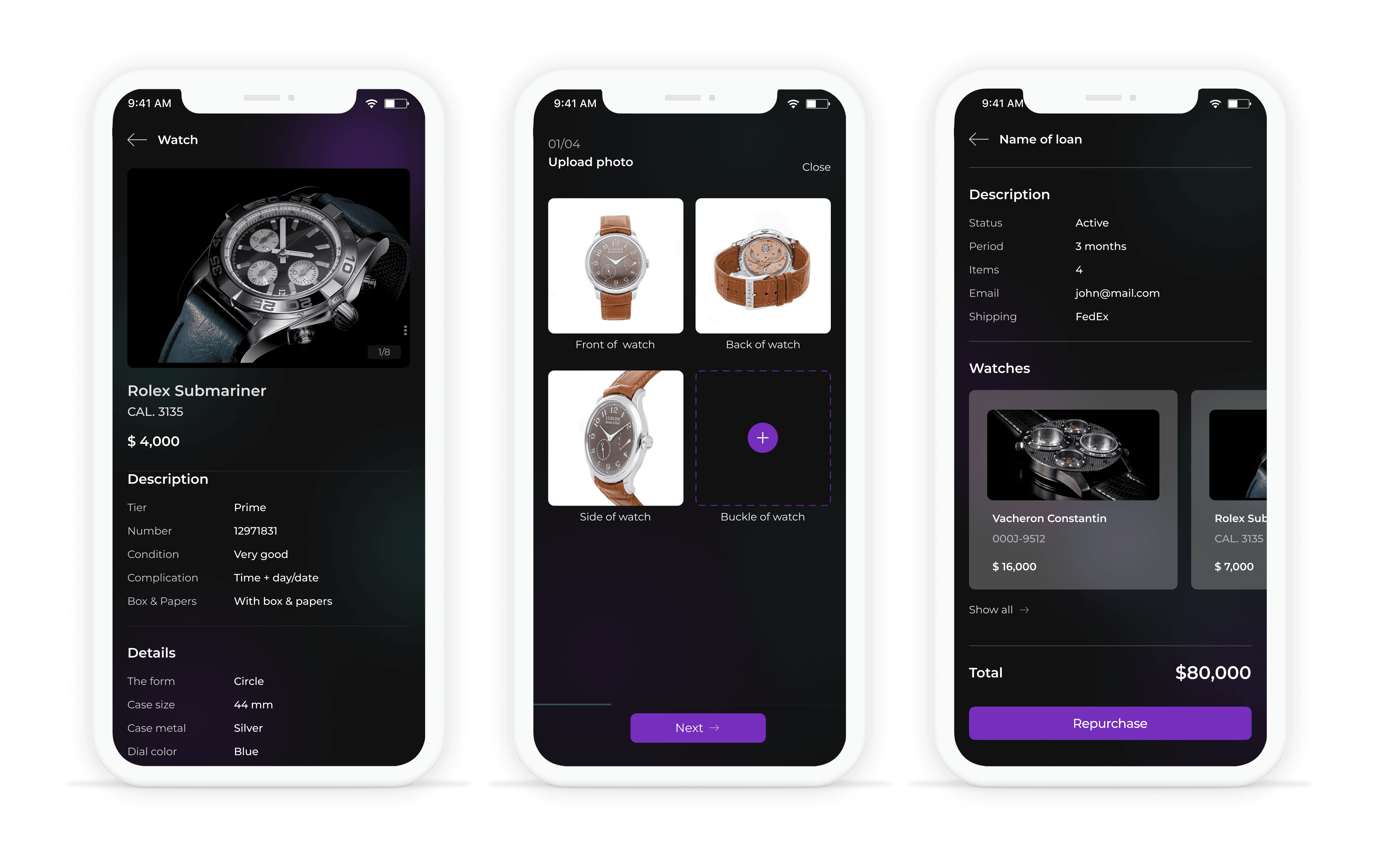
We broke the onboarding into clear steps and enforced required inputs at each stage. So, users can’t skip critical data like condition, reference number, or key specs. Each step writes to a unified watch object, and by the end of the flow, the asset is fully usable for valuation and lending scenarios.
Collection Management with Value Aggregation
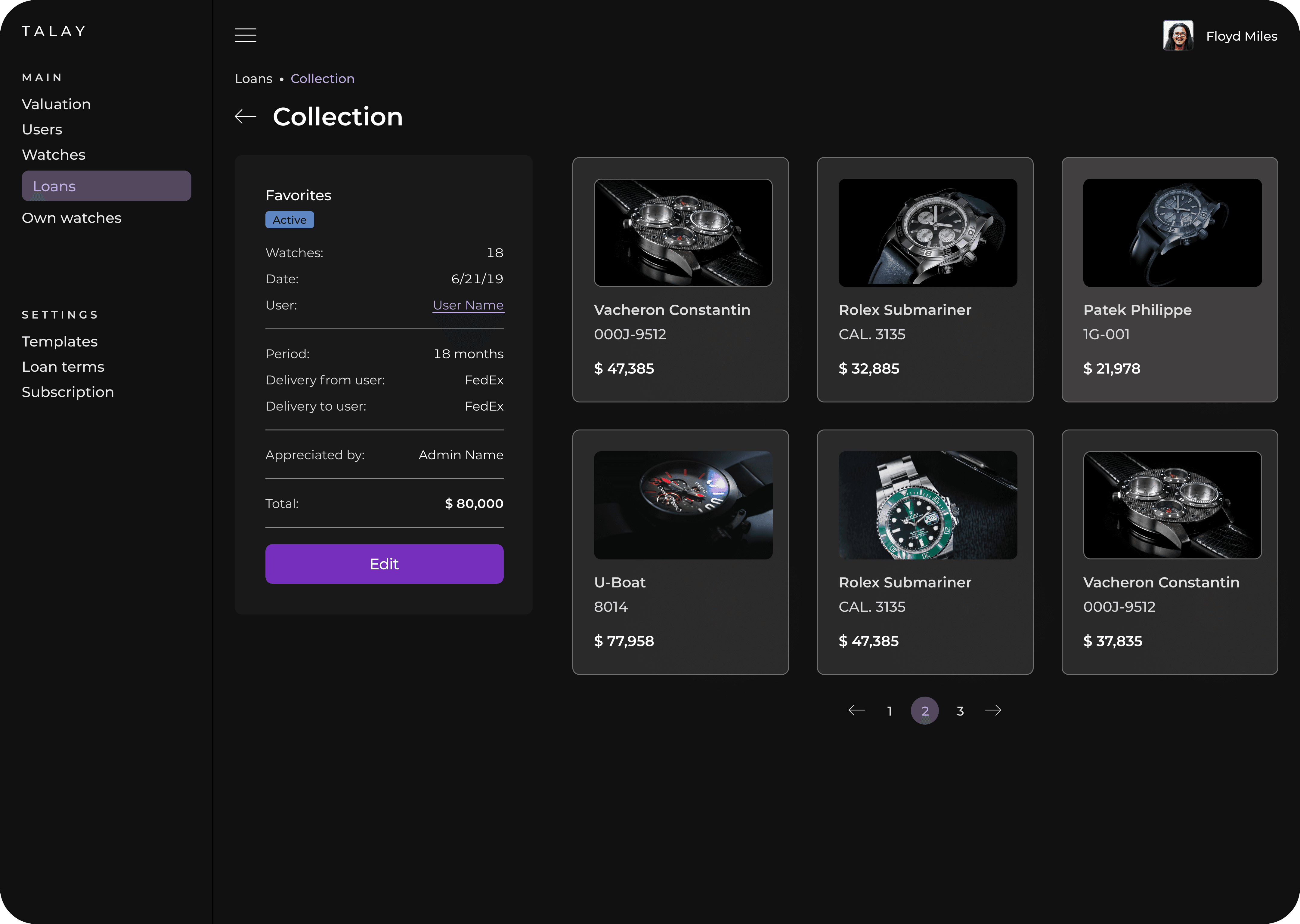
Collections are financial units. Each watch contributes to a total value that updates in real time, so users immediately see how their portfolio changes and can use a full collection as collateral without manual calculations.
Asset-Based Loan Creation
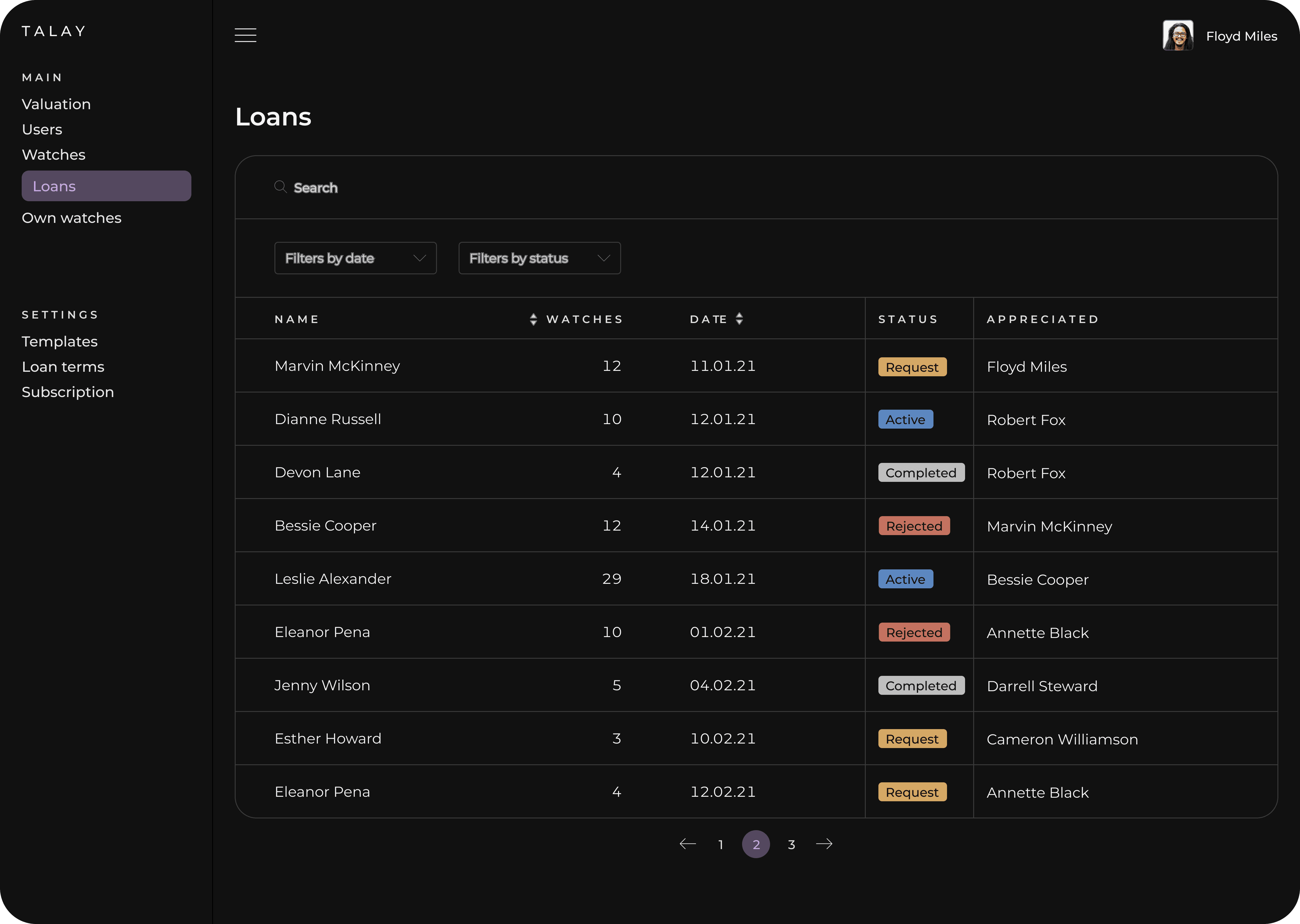
Instead of asking users to re-enter data, we built the loan flow to pull directly from selected watches. The system links assets to the loan object, applies appraisal inputs, and keeps this relationship intact. Every loan clearly reflects what exactly backs it.
Loan Lifecycle Tracking
Our team implemented a strict status system with defined transitions (request → active → completed/rejected). Users always understand where they are in the process. Behind the UI, each state updates related data consistently to prevent mismatches between loan status, assets, and user actions.
Results
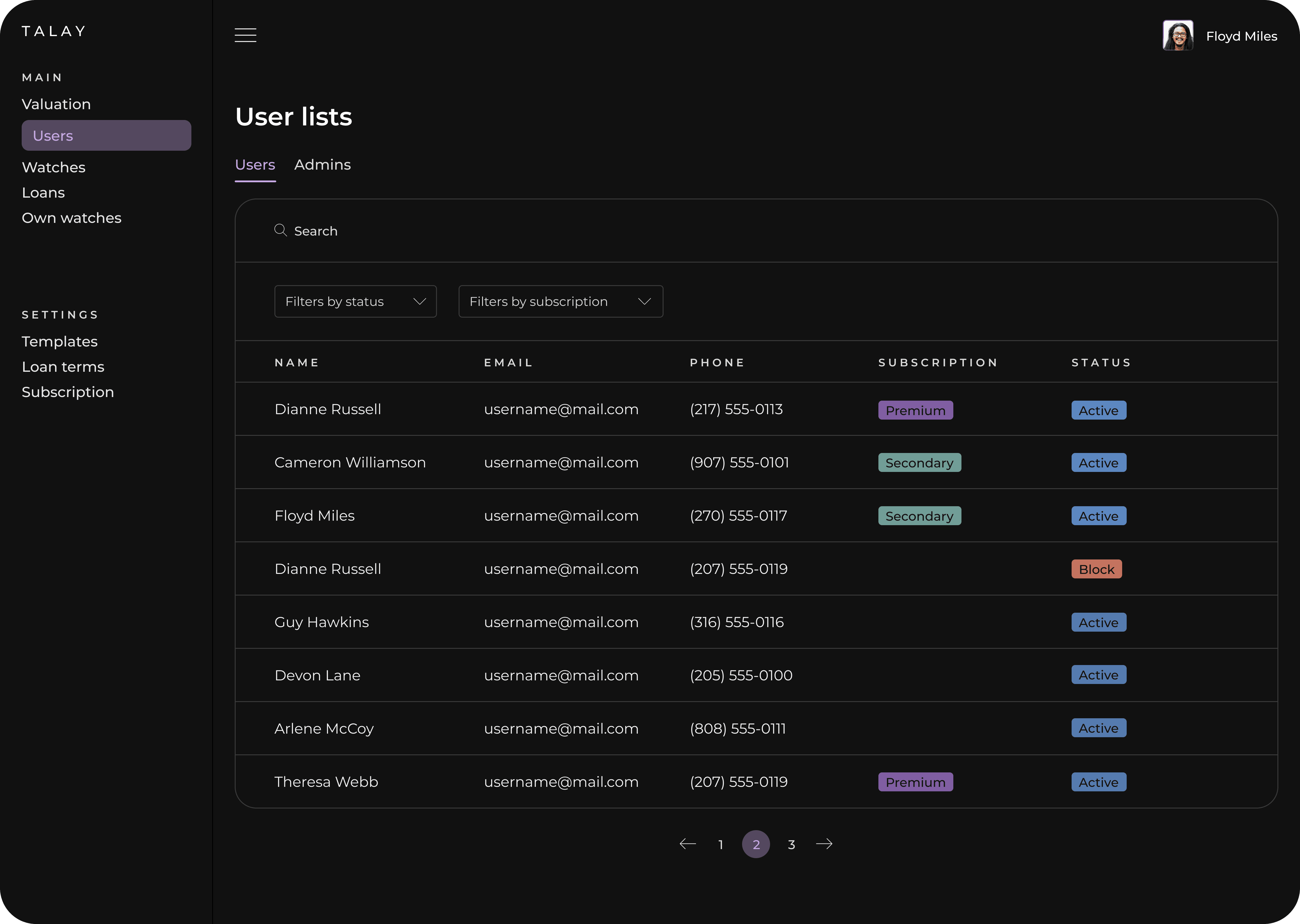
- Our Yojji team delivered 70+ mobile screens, covering the full flow from asset onboarding to loan management.
- Structured onboarding and pre-defined input fields reduce manual input and decision friction. Users can add and prepare assets up to 53% faster.
- Standardized data models and validation logic led to 65% fewer data inconsistencies.
- Clear status logic and synchronized data across assets, collections, and loans reduced user confusion and resulted in 42% faster loan creation and tracking workflows.
Technologies and tools we used

Project Team