
SuperMe Watch – Health & Habit Tracking Platform


client
SuperMe
Watch
SuperMe Watch
industry
Healthcare
platform
Web & Mobile
5 months
Duration
6 employees
Team
Request
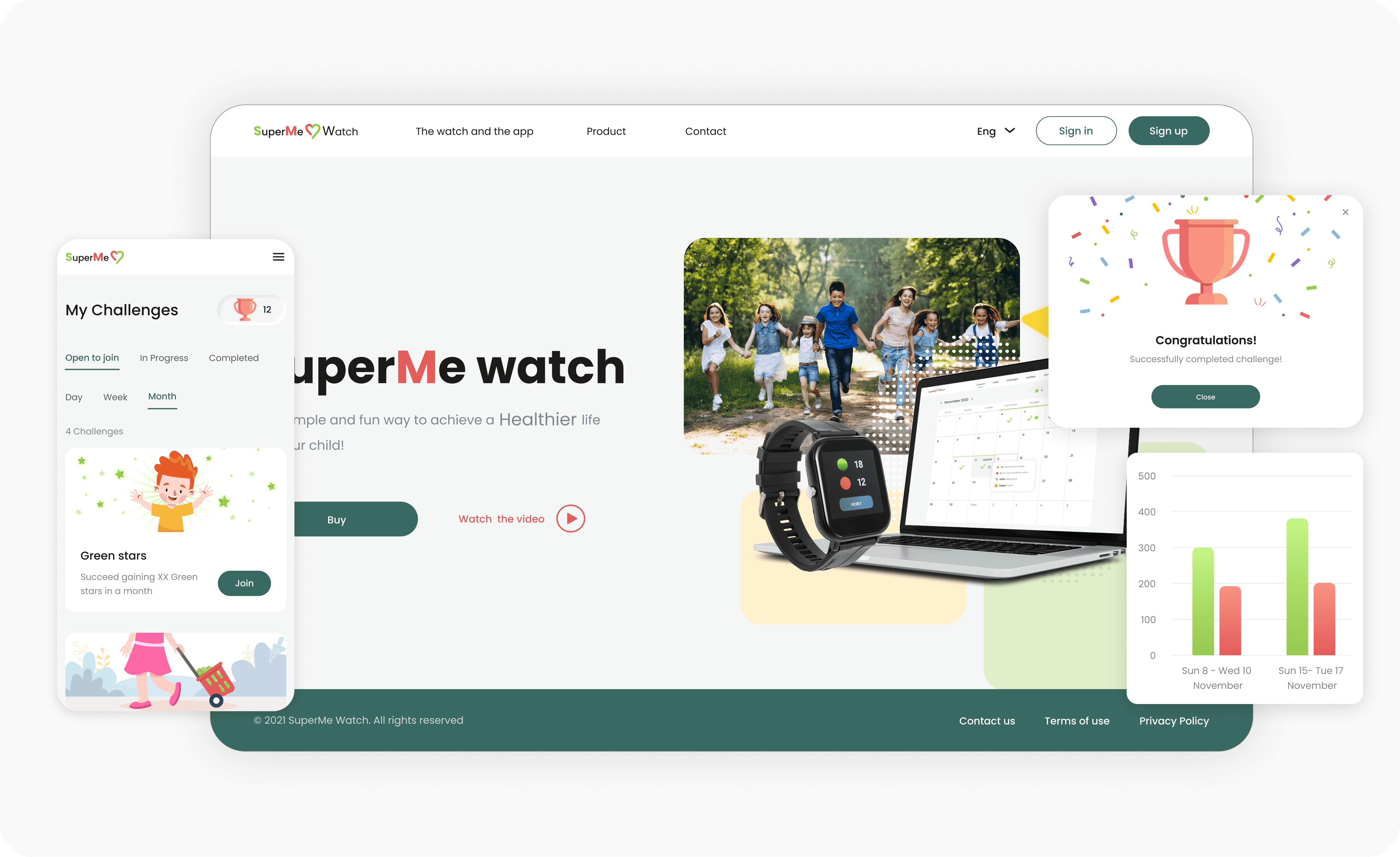
The client needed a digital product that would combine a children's smartwatch with a secure web platform accessible only after purchase. The platform had to provide daily data entry (nutrition, number of steps, mood), visual progress monitoring, tasks, rewards, and educational content for children. The physical watch and web experience had to function as a single system.
Challenge
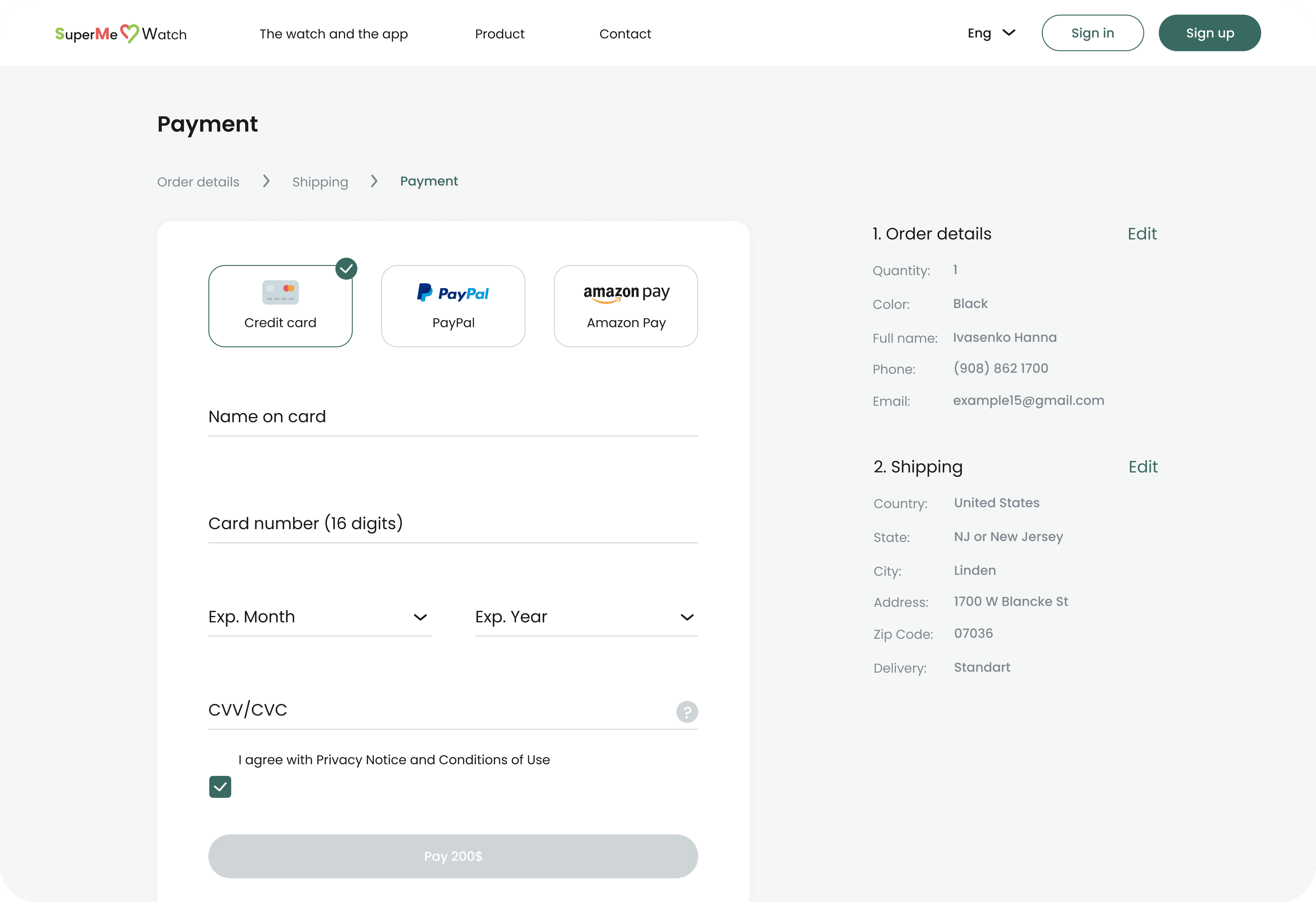
The project required synchronizing a physical smartwatch with a web platform. Our team had to create a secure purchase-based access flow. Each watch unlocks the user's account with a unique code without revealing confidential data. Another challenge was creating a scalable data structure that could manage daily logs, tasks, educational videos, rewards, and progress indicators in real time. The onboarding and further experience must be simple for parents and intuitive for children.
Our solutions
Our Yojji team implemented a purchase-activated access flow where each smartwatch is bound to a unique code that creates and validates a user account. We designed a data model that stores daily metrics with time-based records for accurate progress tracking and historical analytics. Our engineers built role-aware logic to separate child interaction flows from parent oversight. The front-end uses state-driven UI components to reflect real-time progress, achievements, and calendar data.
Core Features
Daily Tracking & Structured Data Logging
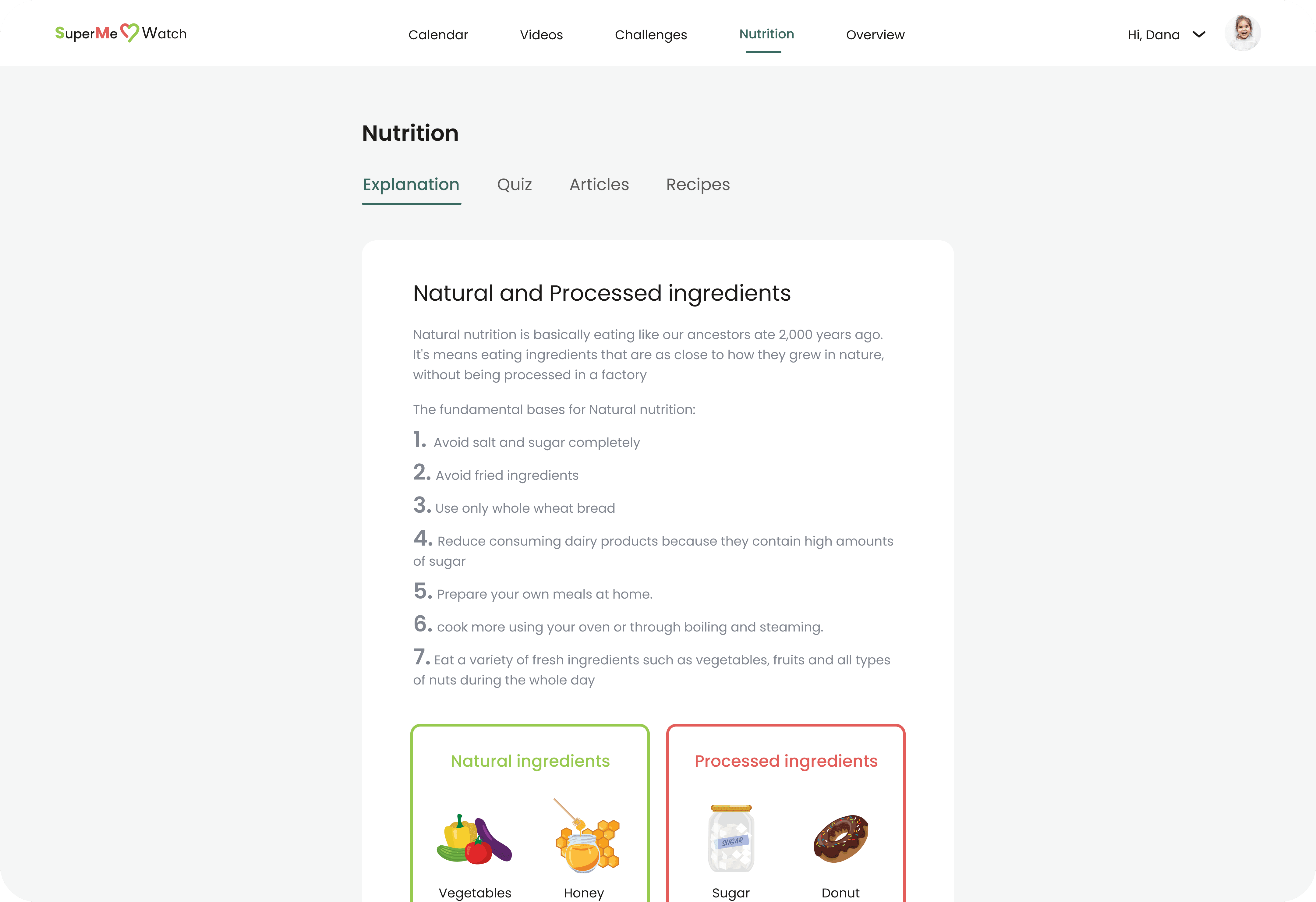
We based the platform on time-series event records. Each step, entering information about food intake, performing habits, and checking mood, is recorded as a dated entry linked to the user's profile. This structure allows parents to make adjustments based on data. We also used icons, predefined options, and minimal text entry to reduce difficulty for children and generate data for further analysis.
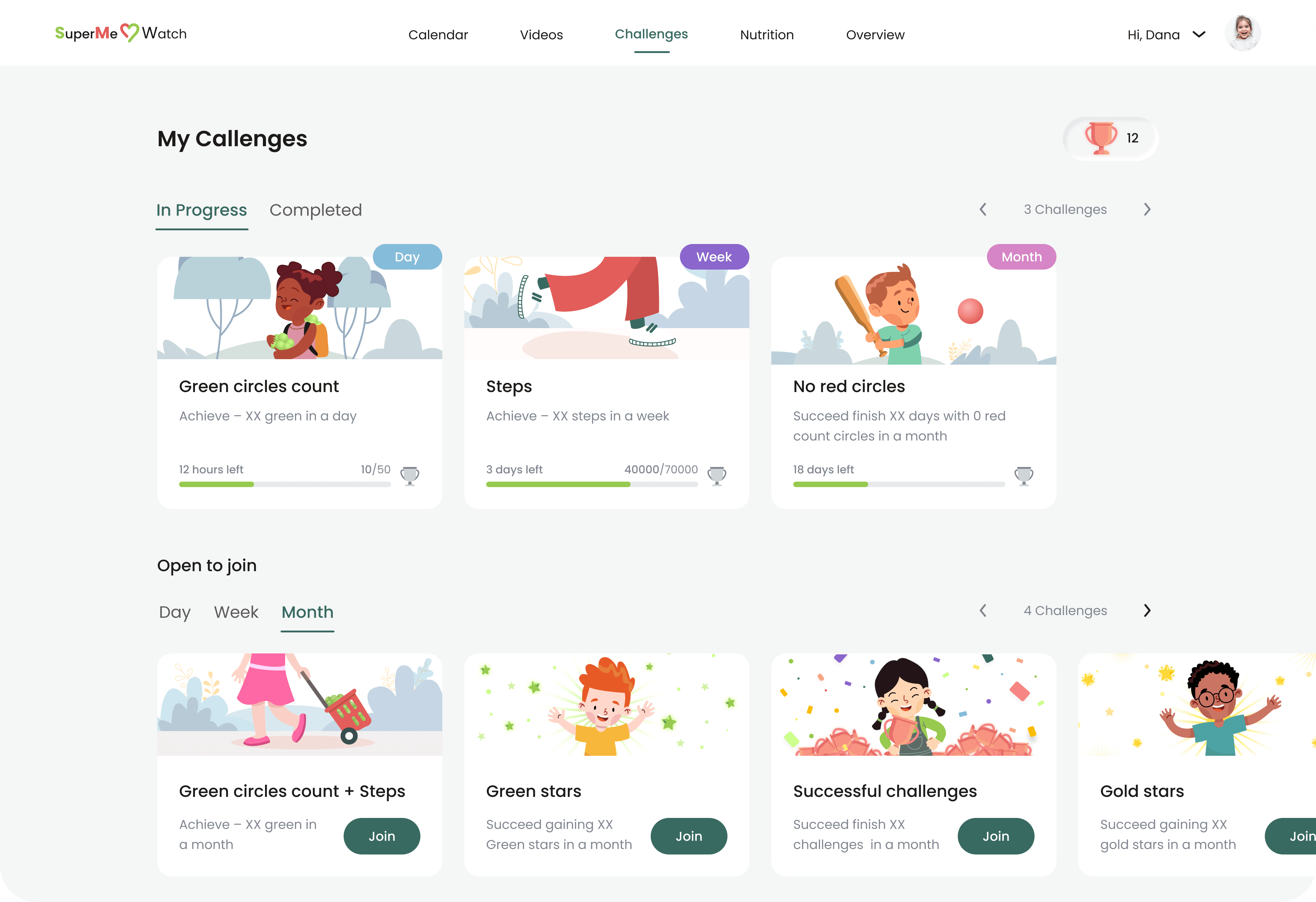
Challenges, Goals & Reward Mechanics
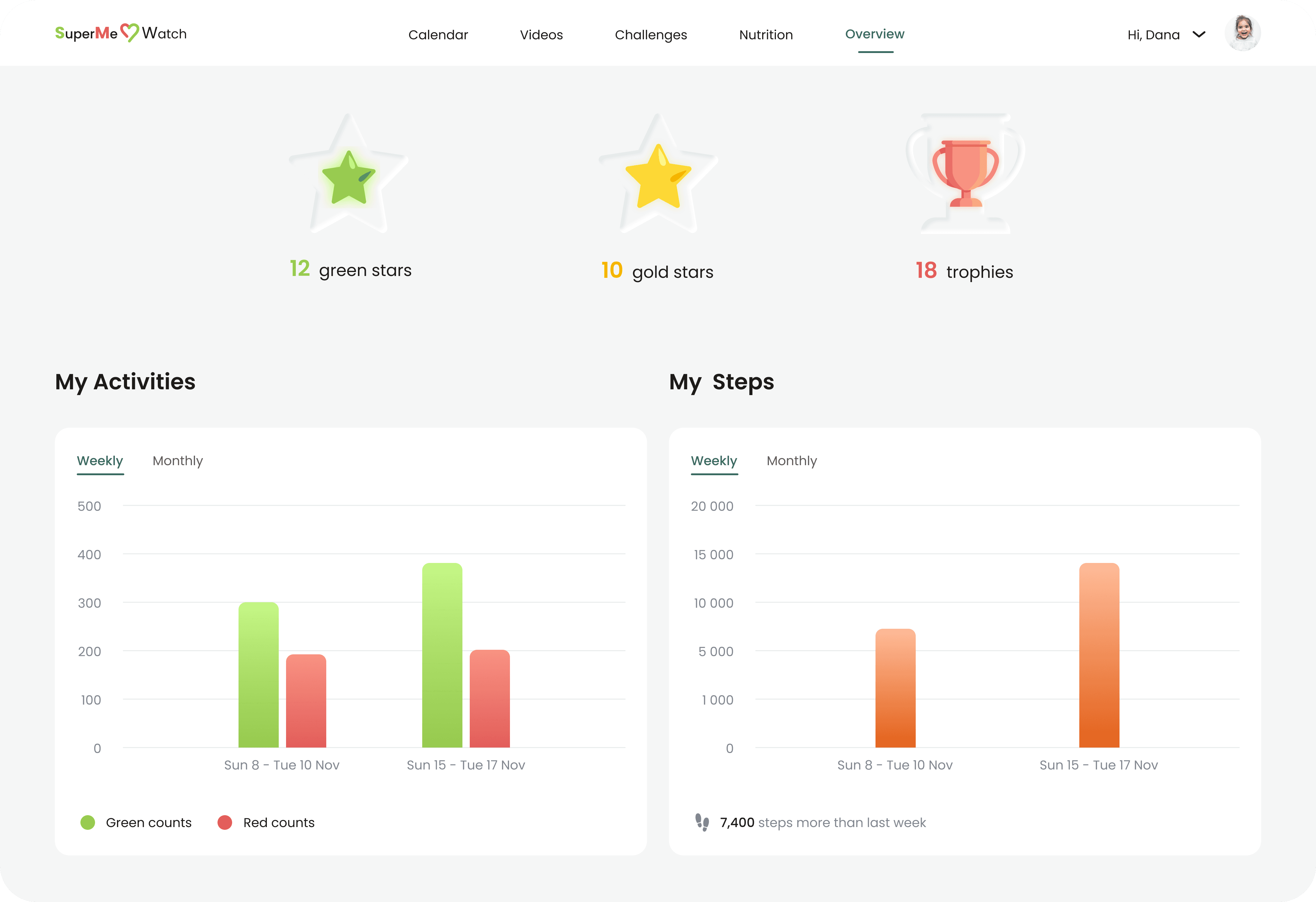
Challenges are rule-based entities. It means the same system may power daily objectives, weekly streaks, and one-time missions. Rewarding (stars/trophies) is implemented using an automated scoring layer that activates only when children achieve certain conditions. We assigned each challenge state to specific UI signals (locked, active, in-progress, and completed), so kids always know what to do next and what they won.
Progress Analytics & Visual Calendar
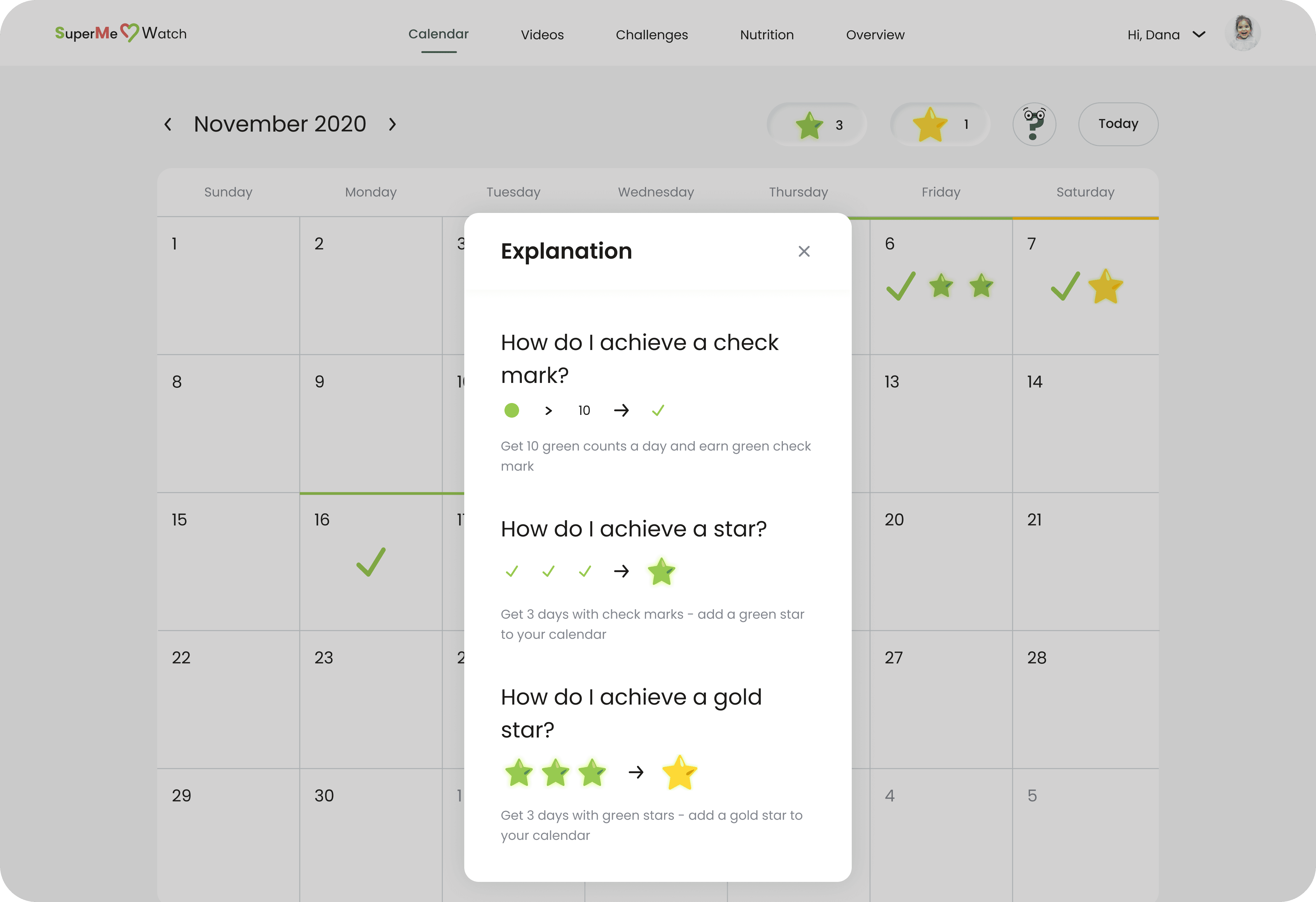
The calendar acts at the daily aggregate level. It translates raw events into a clear daily status and statistical summary (series duration, overall performance, goal achievement). This prevents costly recalculations on each screen and maintains the UI responsiveness even with a large history. Our UI/UX designers created analytics visualizations that are friendly to children. Simple progress indicators, achievement highlights, and trend cues all adhere to common color/icon conventions.
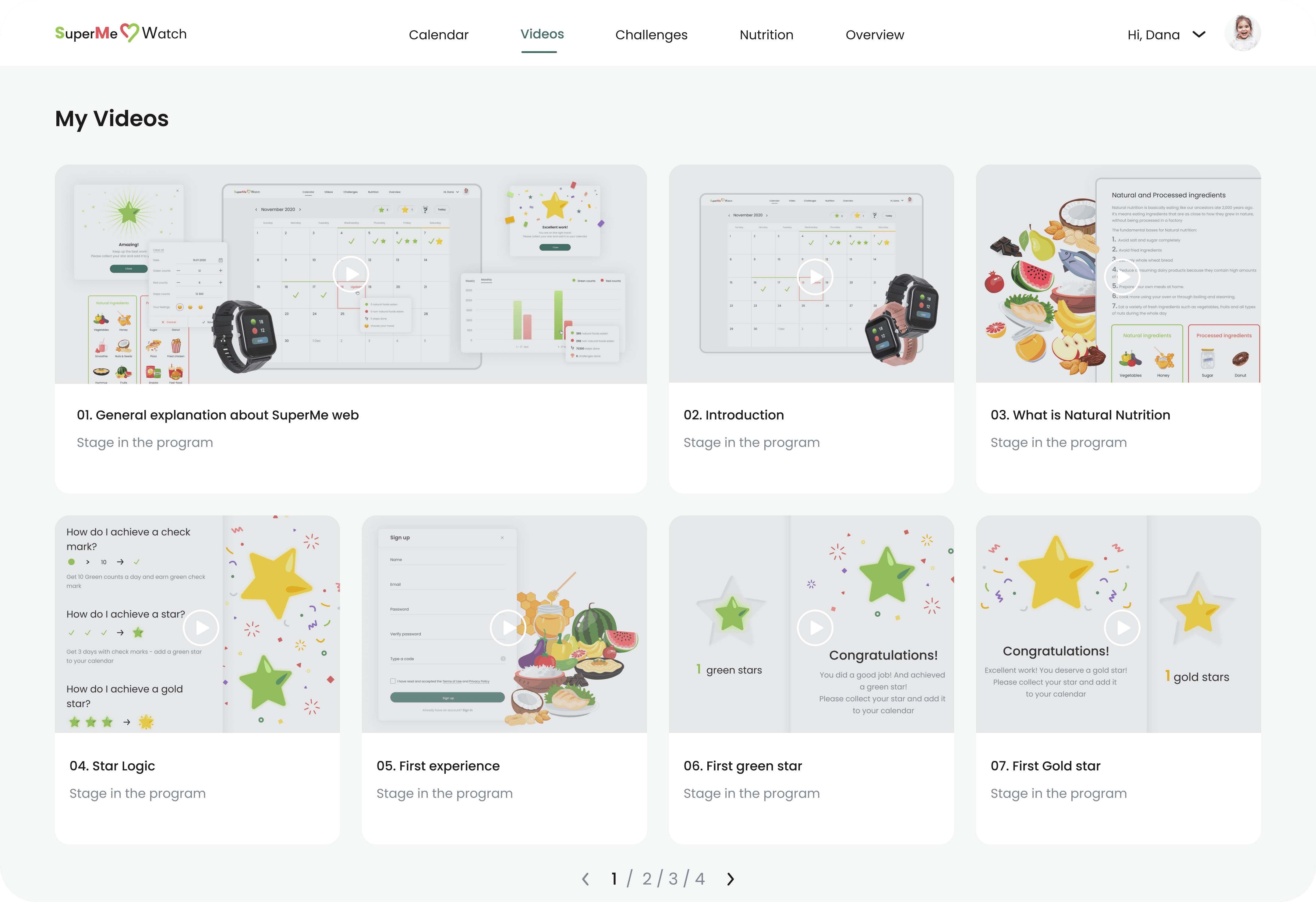
Videos & Quizzes
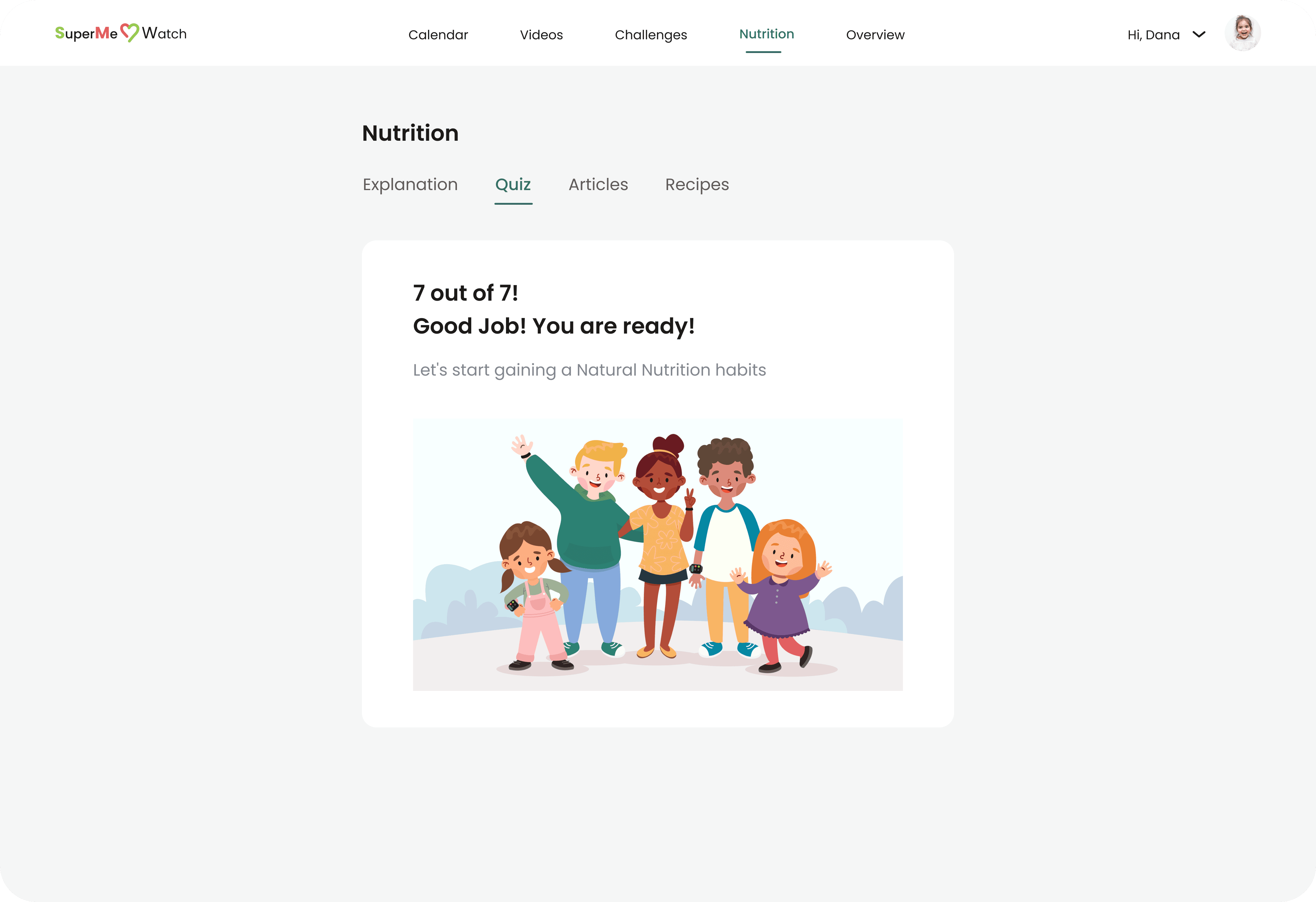
The educational content consists of learning modules with videos and brief quizzes. We saved quiz attempts as structured records so that users could assess their progress and retake them without losing their history. The learning method is straightforward: watch, respond, and receive quick feedback. Children stay engaged when the platform tracks their learning progress.
Results
- We implemented 4 major data domains (daily tracking, challenges, rewards, and education) using time-based records for correct history, streak calculations, and future feature growth without schema modification.
- Our team reduced child-facing interactions to 2-3 actions per activity. This solution lowered cognitive strain and preserved data integrity in the backend.
- Our client got a reusable UI framework for over 30 screens and states, complete with consistent icons, colors, and feedback patterns that assist kids in understanding actions and rewards without instructions.
Technologies and tools we used


Project Team




Similar Cases

Healthcare Booking Platform
Our team designed and developed a custom healthcare booking platform where patients can search doctors, view real-time availability, and book appointments in a few clicks. It’s a unified system that connects multiple medical institutions, handles payments, and synchronizes bookings with each clinic’s CRM. In 7 months, our client got a fully functional web application.
View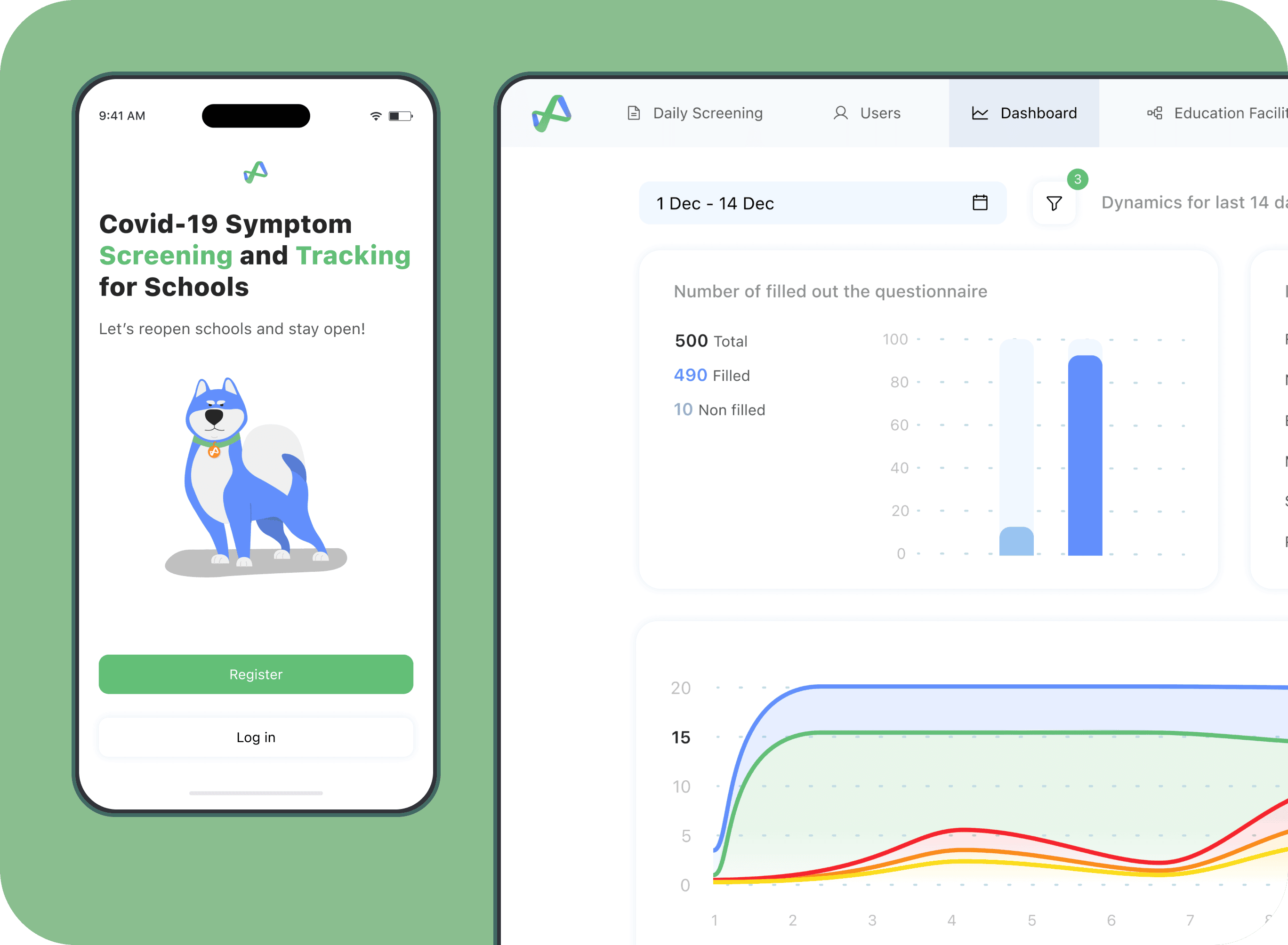
Symptomatical
Symptomatical is a symptom management system developed to help companies and schools reopen safely and proactively manage COVID-19 risks. Our team enhanced the platform with analytics tools, an admin dashboard, a secure authorization system, a dedicated landing page, and Stripe API integration. This solution supports daily health screenings, enforces safety protocols, and ensures seamless operational continuity.
View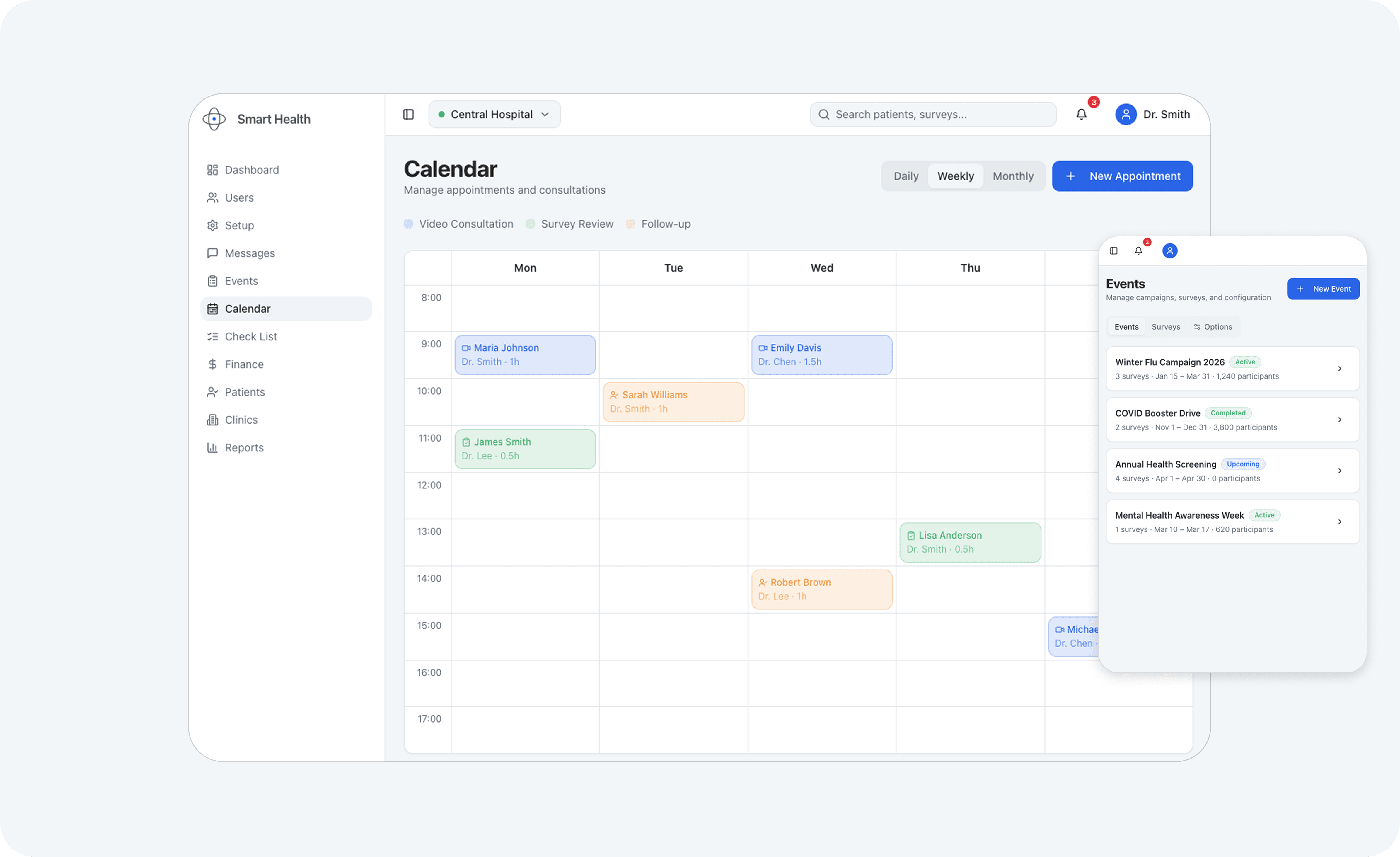
Smart Health – Platform for Healthcare Providers
We developed a web and mobile platform that enables hospitals and medical centers to conduct remote health consultations and structured COVID-19 risk surveys. The system allows organizations to assess individual risk levels, generate personalized prevention recommendations, and create customizable online questionnaires.
View


